Widgetized Section
Go to Admin » Appearance » Widgets » and move Gabfire Widget: Social into that MastheadOverlay zone

Will FEMA Ever Learn From Failing to Prepare?
The views expressed are those of the author and do not necessarily reflect the views of ASPA as an organization.
By Benjamin Paley
July 28, 2025
Benjamin Franklin wrote, “By failing to prepare, you are preparing to fail.” Preparation, whether it’s studying for an exam or preparing for any number of emergency events, is key. Without it, even the best intentioned of purposes will not be sufficient when things start happening, as the recent devastation that befell Camp Mystic shows.
In the early morning hours of July 4th, 2025, floods ravaged through Kerr County, Texas. Kerr County is located 65 miles northwest of the city of San Antonio, in the heart of the Texas Hill Country (on the Edwards Plateau). In Texas Hill Country, there are numerous centuries-old summer camps with very old buildings that are susceptible to damage. And many of those centuries-old buildings were destroyed by the flooding.
Camp Mystic, an all-girls Christian summer camp situated along the Guadeloupe River, is one of those camps. It was hit hardest by the floods.
Camp Mystic’s executive director, Dick Eastland, received an alert from the National Weather Service. The alert provided little helpful information. Eastland did not start evacuating until close to an hour later, when the rain was already coming down hard.
Mr. Eastland lost his own life helping to save as many campers as possible. Camp counselors in cabins closest to the river (Bubble Inn or Twins cabins), nestled among pecan and live oak trees, spent precious moments trying to save the lives of their campers—the camp’s youngest campers. These are young women who are right out of high school or in college.
Of the twenty-eight deaths, fifteen, including two counselors, were from the Bubble Inn cabin, where no one survived.
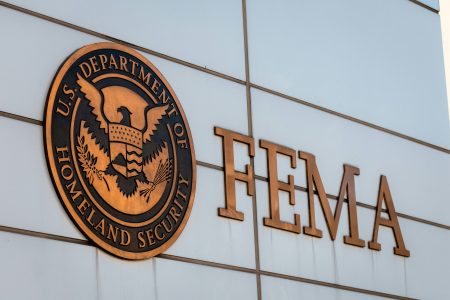
Although the news is filled with heroic rescue stories, the news is also filled with the perceived failures of the Federal Emergency Management Agency (FEMA). Criticism has fallen squarely on the Trump administration’s efforts to greatly cut funding to FEMA. Reporting done in the weeks since the flooding revealed that FEMA exempted Camp Mystic from numerous flood regulations, including removing several camp buildings from FEMA’s flood map. That flood map ensured that buildings and structures in a flood’s path have certain safety precautions in place.
Have government officials at FEMA learned nothing from the failures of the Bush administration in the wake of Hurricane Katrina’s path of destruction in New Orleans? Probably not. The same mistakes keep happening again, and government leaders expect things to actually work out. (The very definition of insanity is doing the same thing over and over again expecting different results.).
FEMA was created in 1979 by President Carter when he signed Executive Order 12127. In 2003, FEMA was placed within the United States Department of Homeland Security. FEMA’s stated purpose is to help people before, during, and after natural and man-made disasters. (Today, FEMA almost exclusively deals with natural disasters.) FEMA employs 20,000 people—experts on addressing issues with natural disasters—and is headquartered in Washington D.C.
FEMA’s main activity is distributing aid to state and local governments after natural disasters. Additionally, FEMA provides grants to states for disaster preparedness, and it operates the National Flood Insurance Program.
Historically, FEMA has had a lot of issues when it comes to responding to emergencies. Most famously, FEMA failed in the wake of Hurricane Katrina to do what it was supposed to do: help victims of natural disasters.
The United States Government Accountability Office released a report in 2019 about improvements FEMA had made since Hurricane Katrina. The report found FEMA was still lacking in several areas: (1) it still can’t ensure that it has enough staff, (2) it still has not assessed national gaps in emergency preparedness, (3) it faced trouble implementing its recovery programs in Puerto Rico after Hurricane Maria, and (4) it is not doing enough to assist older Americans and those with disabilities. These failures can be categorized into two areas: communication breakdown and a lack of direction for the recovery effort.
Cuts to FEMA will result in more disasters like the one at Camp Mystic. What is needed is more direction and better people at the helms. Cutting the funding may feel like it is doing something, but in reality it will just repeat the problems of the past and ensure that FEMA will never be able to do the job it is supposed to be doing.
When will we ever learn? Hopefully, soon. But if recent history is a lesson, then the same mistakes will be made again.
FEMA needs to get its act together so that it can efficiently manage during times of emergency. In the midst of an emergency should not be the time to figure out that something wrong has happened.
Author: Benjamin Paley graduated in 2022 from the Shepard Broad College of Law in 2022 with a J.D. and in 2018 from Florida Atlantic University with a Master of Public Administration degree. He can be reached at [email protected].


 (2 votes, average: 2.50 out of 5)
 Loading...
Follow Us!