Widgetized Section
Go to Admin » Appearance » Widgets » and move Gabfire Widget: Social into that MastheadOverlay zone

States vs. The President: How the Courts Became the New Immigration Battlefield
The views expressed are those of the author and do not necessarily reflect the views of ASPA as an organization.
By George Farag
August 1, 2025
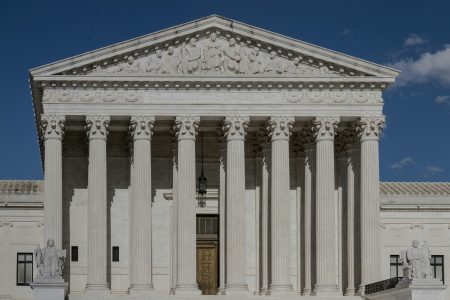
When Donald Trump returned to the presidency in 2025, his rapid moves to overhaul immigration policy surprised no one. What stood out was how swiftly the fight began, not in Congress but in the courts.
On just the second day of his new term, California, New York, Illinois and more than a dozen other Democratic-led states filed a federal lawsuit against the Trump administration. The target: an executive order that denies automatic citizenship to children born in the United States to parents who are either unlawfully present or legally visiting on a visa but neither parent is a citizen. The states argue the policy violates the 14th Amendment and threatens to unravel more than a century of settled law.
The lawsuit is the latest chapter in a now familiar story: states using the courts to check, block or overturn presidential immigration policy. What began as a reactive legal strategy has now become a defining feature of American federalism and one that is reshaping not only immigration but the constitutional balance of power itself.
A Legal Arms Race
State-led lawsuits against the federal government have exploded in both frequency and scope. Between 1980 and 2016, states filed an average of just seven multistate lawsuits per year. In 2017, Trump’s first year in office, that number soared to 40. Over the course of his first term, Democratic states filed more than 150 lawsuits challenging federal policy, many of them focused on immigration.
Republican-led states adopted the same approach when President Biden took office in 2021. Led by Texas, they filed more than 30 immigration-related lawsuits targeting asylum guidelines, enforcement priorities and parole programs for certain nationalities.
Now, with Trump back in the White House, the cycle has reversed once again. Democratic states are returning to the courts, seeking to block policies they view as unconstitutional or destabilizing. And the legal foundation for doing so has never been stronger. Thanks to recent judicial precedents expanding states’ standing to sue, it has become easier for states to challenge federal actions. They can now bring lawsuits not only over concrete harms but over projected costs to state budgets, administrative burdens or abstract threats to sovereignty. This has opened the door to broader, more frequent challenges and transformed legal opposition into a strategic tool of governance.
The Judiciary Takes Center Stage
As this litigation trend accelerates, federal courts have taken on a new role: that of national policy referee. No longer limited to interpreting laws, judges now find themselves deciding who gets to govern, at least temporarily.
Immigration, once squarely under federal control, has become a legal battlefield. States on both sides of the aisle are waging increasingly sophisticated campaigns in the courts and courtroom victories now carry as much weight as congressional votes. What was once an exceptional legal tactic is now standard operating procedure. States are no longer reacting to federal policies but are actively steering them.
Necessary Oversight or Partisan Overreach?
States do have both the authority and the responsibility to challenge executive actions that violate the Constitution or infringe on state interests. This is a core function of American federalism: to guard against executive overreach and protect the balance between national and local power.
The current birthright citizenship lawsuit illustrates this role clearly. States argue that the executive order defies the plain text of the 14th Amendment and risks stripping citizenship from thousands of American-born children. In moments like this, litigation serves as a necessary check.
But this responsibility demands discipline. When every policy disagreement is met with a lawsuit, regardless of constitutional merit, the system begins to buckle. With each change in administration, the courtroom becomes the predictable battleground. The danger is that the judiciary is used not to uphold the law but to stall the opposing party’s agenda.
The result is a paralysis of governance. Policies are frozen before they take effect. Immigration systems are disrupted midstream. And increasingly, it is the courts, not Congress or the people, who determine the course of national policy through emergency rulings and temporary injunctions.
The High Cost of Overlitigation
This overreliance on litigation erodes democratic institutions. As lawsuits replace legislative negotiation, incentives to govern through consensus disappear. Lawmaking grinds to a halt and compromise is replaced by courtroom wins and nationwide injunctions.
Nowhere is this more dangerous than in immigration, where national consistency is vital. Fragmented enforcement not only disrupts policy execution, it confuses families, burdens state and local agencies and further erodes public trust in government.
The Stakes for Federalism
The United States has entered an era of adversarial federalism. States are no longer simply implementing federal policy; they are contesting it, reshaping it and in many cases halting it altogether.
In moments of true executive overreach, this is a necessary correction. But as the default strategy of partisan resistance, it carries steep consequences: a diminished presidency, a politicized judiciary and a country paralyzed by lawsuits and unable to resolve even the most basic questions like who belongs.
Author: Dr. George Farag is a former United States Diplomat and Consular Officer who currently advises on immigration policy and procedures.
 (No Ratings Yet)
 Loading...
Follow Us!