Widgetized Section
Go to Admin » Appearance » Widgets » and move Gabfire Widget: Social into that MastheadOverlay zone

Psychological Safety: The Cornerstone of a Modern Fire Service Organization
The views expressed are those of the author and do not necessarily reflect the views of ASPA as an organization.
By Derrick Phillips
August 4, 2025
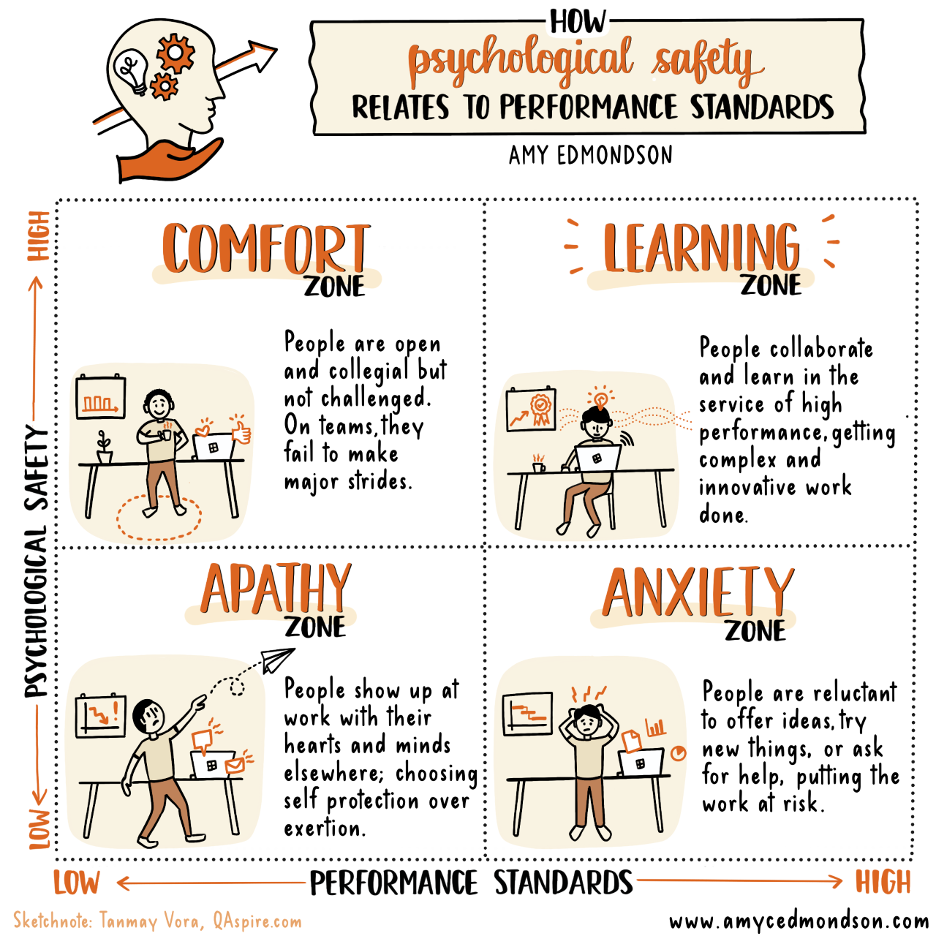
In the high-stakes world of the fire service, the ability to communicate, adapt and collaborate under pressure is not just a cultural asset, it is a survival imperative. Yet amid tactical training, structural firefighting and technical certifications, a vital but often overlooked element of organizational resilience remains psychological safety.
Promoting psychological safety, the shared belief that individuals can speak up, ask questions, admit mistakes and challenge norms without fear of humiliation or retribution, is essential to advancing fire service organizations in the 21st century. It is the invisible framework that holds innovation, team cohesion and safety together. Without it, even the most technically proficient department can become vulnerable to stagnation, turnover and mission failure.
The Nature of Psychological Safety in Fire Service Culture
The fire service is a profession steeped in tradition, hierarchy and paramilitary structure. While these elements are integral to order and emergency response, they can unintentionally suppress open communication and critical feedback, especially from those lower in the chain of command. In such a context, junior members may be hesitant to question unsafe practices, share new ideas or admit when they don’t understand a procedure.
Psychological safety challenges this dynamic by fostering an environment where all members, regardless of rank or tenure, feel empowered to speak truthfully and contribute meaningfully. As Harvard Business School professor Amy Edmondson, a pioneer in the field, notes: “In psychologically safe environments, people are not afraid to tell the truth.”
Why Psychological Safety Matters in the Fire Service
1. Enhancing Operational Safety
Mistakes in the fire service can be deadly. Whether it’s a lapse in situational awareness during a structure fire or a miscommunication during EMS response, psychological safety is directly linked to frontline safety outcomes. When team members are comfortable pointing out oversights or voicing concerns, even if they contradict a superior officer, departments are better able to identify and correct potential errors before they result in injury or loss of life.
Consider after-action reviews (AARs). In a psychologically unsafe environment, these reviews become performative, with lower-ranking members deferring to authority and glossing over critical missteps. In contrast, in a psychologically safe culture, AARs evolve into robust learning opportunities where truth is spoken, mistakes are dissected without blame and lessons are institutionalized for future operations.
2. Fostering Innovation and Adaptability
Today’s fire service is grappling with a growing array of challenges such as climate-driven disasters, opioid overdoses, homelessness and mental health crises to name a few. Addressing these complex and often ambiguous issues requires a culture that values creativity, problem-solving and experimentation.
Psychological safety enables innovation by reducing the fear of failure. When personnel feel safe to propose untested ideas or pilot new response models, the organization becomes more agile and responsive to community needs. It allows for proactive change rather than reactive stagnation, making departments more future-ready in an evolving risk landscape.
3. Supporting Inclusive Cultures
Efforts to create inclusive workplace cultures are often undermined by hostile or unwelcoming environments. For underrepresented members, whether based on race, gender, sexual orientation or disability, psychological safety is not a luxury; it’s a prerequisite for engagement and retention.
When psychological safety is present, all voices are invited and respected. Individuals can share experiences of bias or propose equity-based changes without fear of retaliation or being labeled as “troublemakers.” This is essential not only for inclusive culture progress but also for building a workforce that reflects and effectively serves the communities it protects.
Building Psychological Safety: Leadership’s Critical Role
Creating a psychologically safe fire department does not happen by accident. It must be modeled, supported and reinforced by leadership at every level.
Model Vulnerability: Leaders must be willing to admit their own mistakes, ask for input and receive criticism without defensiveness. This sets the tone for transparency and trust.
Invite Dissent: Encourage respectful disagreement and be deliberate in seeking out perspectives from quieter or less-tenured members. Normalize constructive challenge as a sign of engagement, not insubordination.
Reward Speaking Up: Recognize and affirm those who identify problems or propose solutions. Publicly valuing voice demonstrates that candor is not only safe but essential.
Ensure Accountability Without Blame: Psychological safety is not the absence of accountability. Rather, it’s about learning from errors without shame. Departments must separate blame from responsibility to foster growth.
Institutionalize Feedback Loops: Formal processes like anonymous surveys, peer review and cross-rank discussion forums can systematize openness and create multiple avenues for expression.
Case Study: The Shift in High-Reliability Organizations
Organizations such as NASA, air traffic control and advanced surgical teams have embraced psychological safety as a central component of operational excellence. Fire service agencies aiming to become high-reliability organizations must follow suit. In these environments, failure is studied, not punished; frontline expertise is elevated; and learning is continuous. These values align precisely with the mission of today’s modern fire departments.
The Cost of Silence
The consequences of psychological unsafety are not abstract. When personnel feel silenced or devalued, the organization risks high turnover, poor morale, unchecked hazards and reputational damage. Worse still, it sends a message that conformity is valued more than courage, an antithesis to the very ethos of firefighting.
Conclusion: A Culture Worth Fighting For
The fire service has long championed bravery in the field. Now it must extend that same valor to the workplace culture. Promoting psychological safety is not about coddling or weakening standards. It’s about ensuring that every firefighter, medic and officer has the freedom to speak truth, learn openly and contribute fully to the mission.
In a profession that demands split-second decisions and mutual trust, the ability to communicate without fear is not just an organizational advantage, it is a moral obligation. For departments seeking to thrive in complexity, grow with integrity and lead with purpose, psychological safety is not optional. It is paramount!!!
Author: Deputy Chief Derrick Phillips is a 30-year St. Louis Fire Department veteran, serving as Operations Chief for the A-Shift, Executive Officer and the Office of Homeland Security Commander. He holds a Master of Arts in Security Studies from the Center for Homeland Defense & Security at the Naval Postgraduate School and a Master of Public Administration from Arkansas State University. Chief Phillips also holds the Chief Fire Officer designation through the Center for Public Safety Excellence and is a graduate of the IAFC Fire Service Executive Development Institute.
Disclaimer
The opinions expressed in this article are my own and are not the official position of my agency.
 (2 votes, average: 5.00 out of 5)
 Loading...
Follow Us!