Widgetized Section
Go to Admin » Appearance » Widgets » and move Gabfire Widget: Social into that MastheadOverlay zone

Significant Issues in Women’s Rights and Criminal Justice Policy in Japan: Sanae Takaichi and the Societal Norms in the Far East That Create Systemic Barriers in the 21st Century
The views expressed are those of the author and do not necessarily reflect the views of ASPA as an organization.
By Andrew Vaz
October 31, 2025
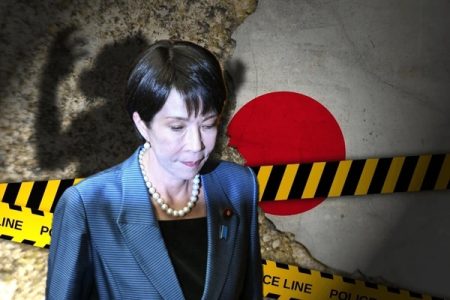
Takaichi Breaks the Glass Ceiling
I present this article at a crucial moment in our world. Japan is on the verge of selecting its first-ever female Prime Minister. Sanae Takaichi, a nationalist and leader of the Liberal Democratic Party in Japan, is poised to become the next Prime Minister after the departure of Prime Minister Fumio Kishida. While this sounds like progress, or the figurative “breaking of the glass ceiling,” this may not actually be the case. Japan’s economic and demographic woes pose immediate challenges for Takaichi should she become Japan’s next Prime Minister. Takaichi has been one of the stalwart right-wing personalities within the Liberal Democratic Party (LDP) as well. She would follow the path of fellow conservative female leaders such as former Prime Minister Margaret Thatcher of the United Kingdom and former Prime Minister Kim Campbell of Canada.
At the time of writing this piece, the parliamentary vote to choose Takaichi would have occurred on October 21st. If selected by the national diet (the name of Japan’s legislature), Takaichi will undoubtedly make history as women are largely underrepresented in Japan’s parliament and have never held the position of Prime Minister. The question now is whether the rise of Sanae Takaichi as the country’s first female head of government will address the structural problems Japanese women currently face. Takaichi’s rise comes despite Japan’s poor international rankings on gender equality and many women are not celebrating her win. This article will look at the systemic challenges facing women’s rights and criminal justice policy reform in Japan.
The Systemic Challenges Facing Japanese Women
As established, Japan has a poor record regarding gender equality. Takaichi, an ultraconservative star of her male-dominated party, is among those who have stonewalled measures for women’s advancement. Takaichi supports the imperial family’s male-only succession and opposes same-sex marriage. Additionally, she opposes a revision to Japanese civil law that would allow married couples to have separate last names so women are not pressured into abandoning their own. Unless something drastic were to occur in her tenure, one should not expect any positive change to the systemic challenges that Japanese women face.
Women’s rights in Japan have advanced since their post-WWII enfranchisement and the 1947 Constitution, supported by legal measures like the Equal Employment Opportunity Law and the Convention on the Elimination of All Forms of Discrimination Against Women (CEDAW). However, significant challenges remain such as ongoing gender disparities in the economy and politics. Women often work part-time jobs and face cultural barriers to leadership roles. Japan’s low ranking in global gender gap statistics reflects these issues, which are worsened by a cultural focus on traditional family roles and a history of organized resistance to gender equality efforts.
Knowing this, do these systemic issues apply to the criminal justice system? In Japan, women in the criminal justice system face systemic barriers including cultural stigmas, judicial biases, and prison conditions that fail to meet basic human rights standards. These issues affect women both as victims and as offenders and they stem from deep-seated patriarchal attitudes within society and legal institutions.
Women as Victims of Crime
There are many prolific criminal cases from Japan involving female victims. Yes, there are laws against violence toward women and the Constitution also includes the right to freedom from violence. Unfortunately, Japanese women are significantly less likely to report sexual violence to the police due to cultural and institutional pressures. A shame-based society that prioritizes group harmony over individual rights can make victims fear public exposure and damage to their family’s reputation. Societal postulations often underestimate sexual violence, especially in cases where the victim knows the culprit. If women report their assault, their reputations will likely be harmed.
Sexual education in Japan trivializes assault and perpetuates incorrect societal assumptions. There is a societal belief that the victims are at fault, especially if the victim knows the assailant. In the past, police and prosecutors have been hesitant to investigate incidents of sexual assault and have frequently shown contempt or mistrust for victims. Up until recently, the law neglected the fact that many victims suffer from psychological “freezing” and instead demanded proof of strong physical resistance.
Women as Offenders and Prisoners
What is seldom discussed in the arena of criminal justice in Japan is women as offenders and prisoners. While male incarceration rates have declined, Japan has seen a notable increase in its female incarceration rate, primarily driven by stimulant drug offenses. This trend occurs despite overall leniency in the system and is a paradox that points to underlying societal issues, not a rise in women committing traditionally “male” crimes.
Despite her tough talk on crime, Prime Minister Takaichi doesn’t offer much direction on how to combat the rise of female incarceration in Japan. This will prove to be a sticking point in her tenure as Prime Minister whenever she is confronted on women’s rights issues.
Conclusion
Prime Minister Takaichi will go down in history as Japan’s first female head of government. Sadly, the structural issues in the nation that oppress women will continue to persist. As evidenced by the election of other female heads of government in the Western world, breaking the figurative glass ceiling may be more performative rather than substantive. PM Takaichi will make history; the question, though, will be what her time as Prime Minister will be remembered for.
Author: Andrew R. Vaz, Ph.D. is a graduate of the Ph.D. in Public Policy and Ad-ministration program at Walden University, specializing in Public Man-agement and Leadership. He was already awarded a Master of Philoso-phy (MPhil) degree in the program. He is also a graduate of the Master of Science in Criminal Justice (MSCJ) and Master of Public Administration (MPA) double master’s program at Florida International University. He can be reached at [email protected].

 (4 votes, average: 4.00 out of 5)
 Loading...
Follow Us!


Andrew Vaz
November 3, 2025 at 2:39 pm
Hello,
Admittedly, I am presenting my arguments from a western perspective. However, we must remember that she was not elected by the people – Takaichi won a leadership vote by aligning with another party, making a coalition deal expected to pull her governing bloc further to the right.
I understand that these issues must be understood in Japan and that I shouldn’t frame this from a place of ‘superiority’, but I would be wrong if I didn’t point out these real issues from a human perspective.
Charles Mason
November 1, 2025 at 11:51 am
Andrew your article frames Japan as if it can only progress by adopting Western gender ideology. That creates a built in bias. It assumes Western social values are the universal standard for justice. Japan has its own history culture and political structure. A woman leading her country does not become less legitimate because she does not follow Western feminist expectations. That is not analysis. That is cultural projection.
You also present the glass ceiling as meaningful only when a woman advances on Western terms. That makes the argument circular. It claims progress only when it aligns with a specific ideology. It overlooks the fact that Japanese voters, not Western academics, decide who represents them.
Japan has real issues in criminal justice and gender policy, but these issues need to be understood within Japanese society rather than filtered through Western political frameworks. Cross-cultural assessment should start with respect, not automatic assumptions of superiority.
Wes
October 31, 2025 at 9:45 pm
Thank you for this deeply important and incisive article. You’ve done a great job of revealing how legal reforms, criminal-justice policies and societal norms intersect in Japan to create systemic barriers for women. The way the piece highlights issues such as the limited alternative sentencing for women offenders, weak enforcement of discrimination laws and the embedded expectations of gender roles gives the reader both legal and cultural context.