Widgetized Section
Go to Admin » Appearance » Widgets » and move Gabfire Widget: Social into that MastheadOverlay zone

A Human-Centered Approach to AI
The views expressed are those of the author and do not necessarily reflect the views of ASPA as an organization.
By Michael R. Ford
February 13, 2026
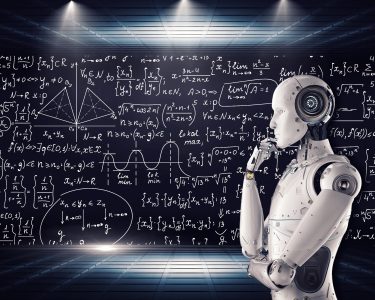
“Is Mr. Bojangles a sad song?”
I have used Artificial Intelligence (AI) exactly once in my life. It informed me, despite my belief that Mr. Bojangles is a happy song because I have fun playing and singing it, that the song is in fact sad. What do I do with this information? Should I trust what AI told me despite my own experience? Should I change my emotional response to the song because of what AI very authoritatively told me?
The stakes of my lone AI usage were relatively low. Aside from me and a few friends at an open mic night trying to settle an argument, few people likely care whether Mr. Bojangles is a sad song. The broader stakes of the increasing use of AI, however, are far from low. Society is experiencing a significant technological shift whether it welcomes it or not. As my limited use of AI suggests, I am somewhat late to embracing this transition. Some might call me a skeptic.
My skepticism is rooted in my experience and beliefs about government and the public administration field. I have long argued that public administration is fundamentally a human-driven enterprise focused on meeting human needs. Attempts to remove humans from governing processes, whether through AI or other mechanisms, risk displacing people as the central focus of governance. Foundational public administration values such as efficiency, effectiveness and equity exist to help government serve human needs. Efficiency should not be pursued for its own sake, because doing so risks sidelining ethics, democratic values and constitutional principles.
A useful framework for understanding AI’s role in governance comes from Christopher Pollitt, who wrote in 1990 that the primary path to social progress lies in increased productivity and that productivity gains stem from the application of more advanced technology. From this perspective, AI represents the latest technological advancement with the potential to improve productivity and promote social progress. Under this framework, AI can and should function as a tool that helps government efficiently meet human needs.
My concern arises from AI advocates who present it as a universal solution to government challenges. The failure of DOGE to deliver on its originally promised savings demonstrates how AI can create problems when implemented without a clear purpose or understanding of the task and context involved. This concern is echoed in the work of Neil Postman, who warned about how technology can fundamentally reshape human experience and cautioned against reaching a point where technology is no longer subordinate to human needs but instead drives human behavior. When technology ceases to function as a tool for human advancement, it becomes a potential threat.
I recognize that this argument risks sounding like casual philosophical reflection, and at times Postman’s work can appear exaggerated. Nevertheless, the central lesson remains important. There is significant space between being a cautious and limited AI user and becoming an unquestioning AI enthusiast. Governing institutions, including municipalities, state agencies, federal departments and universities, that develop clear policies, defined goals and deliberate purposes for AI usage as an efficiency tool will hold a meaningful advantage over those that ignore AI or deploy it without fully understanding its implications.
Where do the policies, goals and purposes guiding AI implementation originate? The answer remains humans. Previous public management reforms reshaped public sector responsibilities. For example, the New Public Management movement emphasized contract management and external service delivery rather than direct service provision. The AI era will similarly require human involvement, though with new skill sets. It will also require revised approaches to accountability, performance measurement and administrative oversight.
Viewing AI through the historical lens of public administration reform provides reason for optimism. AI has the potential to be harnessed as a tool that advances human needs through efficiency improvements. Even skeptics can recognize the value of automating routine administrative tasks that often divert attention from substantive governance work. A human-centered approach to AI is achievable, but it will require reforming educational preparation, establishing responsible guardrails for implementation and maintaining a commitment to public administration as a fundamentally human enterprise.
Author: Michael R. Ford is a professor of public administration at the University of Wisconsin Oshkosh, where he teaches graduate courses in budgeting and research methods. He frequently publishes on the topics of public and nonprofit board governance. He also serves as the Director for the Whitburn Center for Governance and Policy Research, and as an elected member of the Oshkosh Area School District Board.
 (2 votes, average: 5.00 out of 5)
 Loading...
Follow Us!