Widgetized Section
Go to Admin » Appearance » Widgets » and move Gabfire Widget: Social into that MastheadOverlay zone
People, Work and Public Institutions: Leadership Lessons from Delano for Workforce Governance
The views expressed are those of the author and do not necessarily reflect the views of ASPA as an organization.
By Malcolm K. Oliver
February 27, 2026
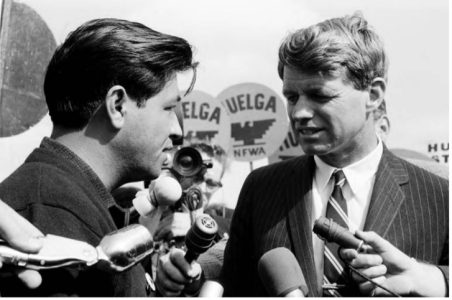
The room was crowded, tense and unusually quiet for a government hearing. Farmworkers sat beside reporters and local officials as Senator Robert F. Kennedy leaned forward to question a county official about the arrest of striking agricultural workers. Kennedy’s question was simple: if these workers had broken no law, why were they being detained? For the workers present, the moment was not abstract politics. It was recognition. Conditions they had lived with for years were finally being spoken aloud inside an institution capable of responding, reminding those present that the dignity of workers must remain central to public decision making.
Moments like the Delano hearing remind public administrators that workforce realities often exist long before institutions formally acknowledge them. People move where work exists, families adjust to changing labor markets and communities adapt before policies are updated. Governance systems then undertake the slower process of aligning service delivery and institutional capacity with realities already in place. Institutional strain emerges when human needs change faster than the systems designed to serve them.
Public discussion about immigration frequently centers on legal status or partisan disagreement. For public administration, however, the starting point is workforce participation. Across Minnesota, immigrant workers help build homes, staff food processing facilities, support health care operations and sustain service industries. They are parents, neighbors and community members whose contributions stabilize households and sustain local institutions. When policy conversations overlook this reality, agencies and local governments are left managing workforce shortages and service pressures without aligned planning structures.
Workforce governance takes shape in everyday institutional settings. It occurs in classrooms where newly arrived residents prepare for licensing exams, in job training programs where workers learn safety standards and in counseling sessions where families receive guidance on employment, childcare and small business development. These interactions rarely make headlines, yet they form the pathways that enable economic and civic participation.
Public administration scholarship emphasizes efficiency, economy and social equity as guiding principles of governance performance. Minnesota’s labor structure illustrates how these principles intersect. Agricultural labor data show that thousands of seasonal migrant agricultural workers arrive annually during peak harvest periods to meet short term labor demand. These seasonal flows provide essential support during harvest cycles, yet they often remain disconnected from longer term workforce integration strategies. At the same time, a year round workforce supports construction, manufacturing, service and logistics sectors across the state. When workforce systems remain fragmented, agencies face higher training costs, increased turnover and more complex coordination across programs and jurisdictions.
Economic participation reinforces this administrative reality. Fiscal analyses estimate that immigrant households generate substantial annual income, consumer spending and tax contributions that support transportation systems, education and other public services. These contributions reflect economic integration and sustained community investment.
Social equity introduces an additional governance responsibility. Research consistently documents that migrant agricultural workers face elevated risks associated with environmental exposure, seasonal income instability and limited access to preventive health care. Transportation barriers and service gaps further affect participation in public health and social service systems. Across industries, many immigrant workers remain concentrated in physically demanding occupations with lower average wages while performing essential labor that sustains regional economies. Protecting the dignity and safety of these workers is inseparable from effective institutional performance.
Viewed together, these workforce conditions reveal a central administrative challenge. Minnesota’s economy relies on the labor of individuals whose work sustains daily life, yet workforce integration systems, public health planning and service delivery structures are not always designed around this demographic reality. The resulting misalignment increases pressure on local governments, public agencies and nonprofit partners that must address workforce shortages and service access barriers without coordinated long term planning frameworks.
The lesson suggested by the Delano hearing is institutional rather than historical. Workforce conditions become visible to governance systems at different moments, but when they do, administrative structures must evolve in response. Institutions function best when they adjust to the people and communities already shaping their jurisdictions.
Minnesota’s immigration debate will continue to generate headlines. The deeper challenge, however, is administrative. Workforce participation patterns and sector level labor demand are already shaping institutional responsibilities. The central governance question is how effectively workforce policy, service delivery systems and economic development planning align with the people whose work sustains the economy. When institutions recognize human dignity at the center of workforce reality, institutional response can follow with clarity, coordination and long term stability.
Author: Malcolm K. Oliver, Ph.D., MPA, is dean of the John S. Watson School of Public Service at Thomas Edison State University and an active member of ASPA focused on ethics, equity and public leadership. He can be reached at [email protected].
 (7 votes, average: 5.00 out of 5)
 Loading...
Follow Us!