Widgetized Section
Go to Admin » Appearance » Widgets » and move Gabfire Widget: Social into that MastheadOverlay zone
A Time for Fundamental U.S. Federal Government Change
The views expressed are those of the author and do not necessarily reflect the views of ASPA as an organization.
By Thomas D. Lynch and Cynthia E. Lynch
May 8, 2026
Introduction
The United States federal government is facing a period of significant change. We are at a moment where competing visions of governance are in tension, including concerns about democratic norms and institutional stability. The New York Times Poll Tracker (03/29/26) tells us “Democrats lead in the vast majority of recent polls, though by single-digit margins.” Recent American international actions have not only impacted the national economy but have also had indirect economic effects on other nations.
To compound matters further, there is concern among some observers that voting in the coming election may face challenges related to access and public confidence in electoral processes, raising broader questions about the future direction of democratic governance. This has intensified debate over current political reforms and their implications for democratic institutions.
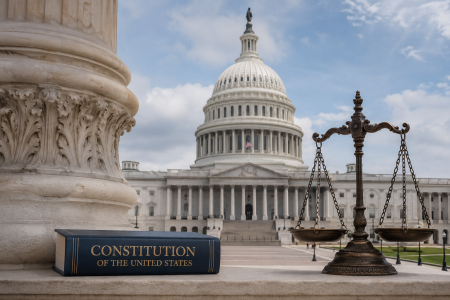
History tells us that just as the delegates were leaving the Constitutional Convention in 1787, a woman asked Benjamin Franklin, “Well, Doctor, what have we got, a republic or a monarchy?” He famously replied, “A republic, if you can keep it.” We are in a moment that tests that responsibility. The ultimate outcome is not yet clear.
Impact on Public Employess
If democratic institutions were to weaken, it would have meaningful implications for public employees and those who educate and train them. Already, there have been significant budget cuts and extended government shutdowns. Numerous lawsuits have been filed by state and local governments, organizations and individuals in defense of constitutional principles and the rights of the people. Many have succeeded, but legal and administrative disputes continue. According to the Trump Administration Litigation Tracker (03/30/26), there are currently 227 active cases.
In earlier periods of American history, citizens and institutions have acted to defend and strengthen constitutional governance. In this moment, high voter turnout in mid-term elections would be one avenue for civic engagement and institutional accountability. However, outcomes will depend on ongoing political and institutional developments at the federal level.
For example, merit-based hiring has faced partial constraints under recent administrative actions, and further changes could potentially redefine how merit is assessed in federal employment or alter existing civil service frameworks.
There is also debate among observers about whether federal employment criteria could increasingly emphasize political alignment with leadership. While such outcomes are not established, they have become part of broader public discussion about the direction of federal personnel policy.
A pattern of institutional strain is already being discussed in public discourse, and some observers identify concerns in the following areas:
- Increasing restrictions on media access or coverage
- Public figures, including reporters and entertainers, facing professional consequences for statements
- Ongoing debates regarding the independence and scope of judicial review
- Disputes over citizenship status and related enforcement actions raising due process concerns
- Concerns regarding immigration enforcement practices and procedural protections
- Government actions affecting universities through funding, fines or compliance requirements
- Requirements for legal services provided under government pressure or mandate
- Expansion or reduction of federal programs without clear congressional alignment
- Executive interpretation or application of federal budget authority
- Conflicts between elected officials and executive authority over statutory interpretation
- Presidential use of tariff authority and related trade measures without explicit congressional approval
Conclusion
The purpose of this article is to encourage discussion about the future of American democratic governance and the institutions that support it. The immediate goal is not to reach definitive conclusions, but to elevate awareness of institutional challenges and encourage public reflection on the role of governance in a complex political environment.
What is needed is a professional and constructive examination of these issues grounded in the public good rather than narrow political or private interests. Public servants, educators and policymakers each play a role in shaping this discourse.
Each of us is an important resource in public debate and policy development. Now is the time to consider how professionals in public service can contribute to strengthening governance systems and institutional resilience.
This article is not a traditional academic presentation. Instead, it reflects the authors’ perspective on civic engagement and institutional responsibility in a changing governance environment.
Author: Thomas D. Lynch, Past ASPA President 1992-93, Professor Emeritus Louisiana State University and adjunct faculty, College of Professional Studies, Hawaii Pacific University. [email protected]
Author: Cynthia E. Lynch, Associate Professor and Chair, MPA Program, College of Professional Studies, Hawaii Pacific University. [email protected]

 (2 votes, average: 3.00 out of 5)
 Loading...
Follow Us!