Widgetized Section
Go to Admin » Appearance » Widgets » and move Gabfire Widget: Social into that MastheadOverlay zone

AI Data Centers and The Nuclear Renaissance


The views expressed are those of the author and do not necessarily reflect the views of ASPA as an organization.
By Barbara Neuby
July 28, 2025
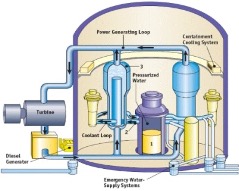
Figure 1. Pressurized Water Modular Reactor
Like the proverbial Waffle House in the South, it seems we must have a data center on every corner. Their rapid build out has added fuel to the nuclear renaissance. According to the U.S. Department of Energy, data centers used 4.4 percent of the U.S. electric capacity in 2023, and the expectation is that usage will rise to 12 percent in 2028. President Trump’s Executive Orders of May, 2025 set nuclear power as the driving force for data center development. These Orders coincide with a relatively unknown effort of the last 20 years to reignite nuclear power. Although only one nuclear power plant has been licensed in the last 50 years (Plant Vogtle, Georgia Power), the nuclear industry, the Department of Energy (DOE), several countries, and selected private contractors have been carrying on something of a secret nuclear affair since 2000, well before AI. Flying under the radar in 2001, the Department of Energy created Generation IV (GIF), an international consortium of sovereign regulatory agencies that have settled on six types of advanced reactors. This work continued when, in 2019, Congress passed the Nuclear Energy Innovation and Modernization Act to streamline nuclear licensing regulations and spur innovation. About the same time, the International Atomic Energy Agency (IAEA) developed the “Nuclear Harmonization and Standardization Initiative” (NHSI) and the Nuclear Regulatory Commission (NRC) and the Nuclear Energy Agency of the Organization for Economic Cooperation and Development (OECD) formed the Multinational Design Evaluation Program (MDEP) to assess reactor pros and cons. From 2023 to 2024 Congress allocated a whopping $4.7 billion to continue research on a new type of nuclear fuel—”high assay, low-enriched uranium” (HALEU) in two demonstration projects with Terra Power and X-Energy. Nary a peep about this activity was heard from any presidential candidate on the 2024 campaign trail yet this movement has been moving forward for roughly two decades. Who knew?
The Small Modular Reactor
The small modular reactor (SMR) hailed by the DOE and World Nuclear Association is the answer to data center prayers because of several advantages. An SMR produces between 15 and 300 MW of electricity, SMRs are modular, quicker and easier to manufacture, faster to stand up, occupy a smaller footprint, have lower siting costs, can be built underground, use lower-enriched fuel, and have alternative cooling and passive safety systems. Amazon, Google, Meta, Oracle and many other tech titans have already agreed to buy power from SMRs. A rosy picture thus painted, modular reactor parts aren’t exactly on the shelf at Tractor Supply. Competent vendors must be found, reliable supply chains must be established, and trained technicians and workers must be sourced. These things take time.
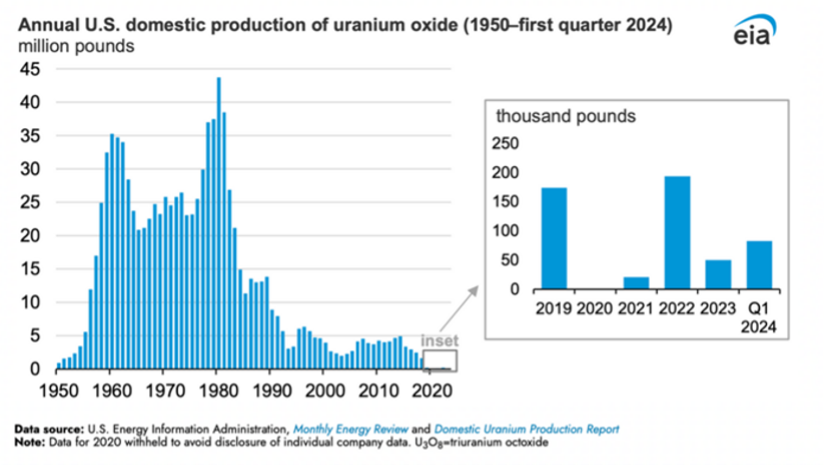
Figure 2. Uranium Production in the U.S.
Although SMRs use less-enriched uranium, the EIA says U. S. production is nil, (Figure 2), but we will need 88,000 lbs. per year by 2030. There are 11 uranium extraction and enrichment facilities in the U.S but only a few are operating. Russia controls 40 percent of the world’s uranium ore but imports were banned in 2024 due to the invasion of Ukraine. Gail Tverberg of OurFiniteWorld.com, notes that down-blending of weapons grade uranium has been the practice to retrieve usable fuel but the process has shortcomings including contamination, cost, declining supply, and terrorism. In addition, licensing, permitting, and siting involve dozens of government entities. Only in May of this year has the NRC actually docketed a construction permit for General Electric’s Vernova unit to build an SMR.
Data Center & Reactor Cooling Trends
Data centers require cooling but if nuclear reactors are to power the centers, they must be cooled as well. The water supply problem is compounded by the power solution. Digitalrealty.com claims data centers use 40 percent of their power to cool servers, which exacerbates the power demand problem. Water cooling is the default method because it transfers heat better than air and requires less power and lower costs according to Andrew Schaap of Forbes. Alternative liquid coolants are available but complex and risky. As data center server density increases, so too, must the cooling capacity. Two advances, “immersion cooling,” which submerges components in a liquid dielectric and “evaporative cooling” that draws water away with fans look promising. Data centers can be located in cooler climates although few are at present. The American Society of Heating, Refrigeration and Air-Conditioning Engineers (ASHRAE) has published new guidelines that allow centers to “run hotter” than previously allowed and complex algorithms have replaced manual controls. The U.S. National Renewable Energy Laboratory (NREL) provided grants to universities but better techniques will not be ready until roughly 2050. Ironically, AI is being used to find solutions to the cooling problem it has indirectly created.
Reactors can use other non-water substances for cooling, like helium gas, various molten salts, and liquid metals. The DOE has funded a $300 million project for molten salt cooling project in Tennessee and the results are positive. One must remember that water or alternatives are not only needed for reactor core cooling but for general reactor processes as well.
Conclusion
President Trump has set the U.S. on a path to be first in the AI world. Data centers will be built, they will require more power but, although numerous technical and administrative initiatives are ongoing, no SMR is producing electricity today. Given the lack of fuel and difficulty of licensing and permitting, that power is not soon coming. Assuming that the HALEU method is feasible, it does not seem that there is (pun intended) the “critical mass” necessary to fuel the reactors. If twenty years of work have already been put in, where are the standards and regulations? Data center power, cooling, permitting, and local siting processes are administrative issues of huge proportions. Monumental decisions must be made by legislatures that conform with federal regulations, albeit late in coming. State and local processes add more time and effort to the schedule and, at this point, it is not settled whose standards will control the licensing process. The local siting of reactors will be anything but easy.
The nuclear industry is running down the field with big tech titans. Public administrators need to take the field and gain control if they are going to rely on AI and promote ethical decisions to move the licensing and permitting phases for data center and SMRs forward and should work with the private sector on cooling advances. They must do so now. The United States is in a geopolitical competition with other countries. Licensing a reactor normally requires one year, building one SMR another year. Data centers are up and running, more are under construction, but reactors will not be up and running before brownouts and water shortages occur when the aging grid and water supply cannot meet the demand.
Author: Barbara Neuby teaches at Kennesaw State University, north of Atlanta, where she researches advancing issues like the central bank digital currency, global financial problems, and the pros and cons of artificial intelligence. She believes these issues are connected and will play out in a new global financial system. Neuby can be reached at [email protected].
 (No Ratings Yet)
 Loading...
Follow Us!