Widgetized Section
Go to Admin » Appearance » Widgets » and move Gabfire Widget: Social into that MastheadOverlay zone
Artificial Intelligence in the Workplace
The views expressed are those of the author and do not necessarily reflect the views of ASPA as an organization.
By Thomas E. Poulin
October 13, 2025
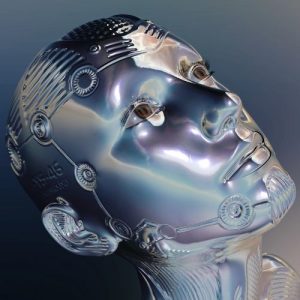
Public administrators continuously seek means to improve services. In part, this can be achieved by leveraging emerging technologies, including artificial intelligence (AI). However, as with any technology that evolves rapidly, public administrators must be careful in deciding how to integrate it into public agencies.
AI is defined as a computer application capable of producing information that previously would have required human intelligence. This is accomplished using algorithms that search and analyze data, building upon previous calculations. In effect, the system learns and adapts, operating beyond explicit instructions. In doing so, applications can accomplish more than was previously possible and these capabilities are rapidly increasing. Public administrators must consider leveraging these evolving AI capabilities to better serve the community.
Potential Benefits
There are several potential benefits from the use of AI. These applications are available all hours of the day, all days of the week, each week of the year. This can be of great value to citizens and employees seeking detailed information in a brief period, notably so after normal office hours. These automated systems work in an accelerated fashion, far faster than any search conducted by a human operator. As these AI applications can learn and adapt, they will not be limited by the specific instructions frequently used when exploring data. Instead, they will be able to expand and refine their search, analyzing and evaluating information that might be highly relevant but which might not have been found through searches based on limited search parameters. AI may also reduce the human error that might occur in traditional data searches. By providing insights from voluminous data effectively and efficiently, AI can promote more effective, informed decision-making by public administrators.
Potential Concerns
There are several potential concerns with the use of AI that public administrators must weigh before integrating these applications into their operational systems.
- The full start-up and maintenance costs of AI are unknown, largely because the applications are so new and evolving so quickly. This concern is not restricted to AI but rather one that public administrators face as any new technology advances.
- There is the potential for violations of privacy if confidential information is included in AI outputs. This might occur if the application accesses confidential information that would not normally have been included or if cybersecurity safeguards are inadequate. This concern might be more notable if the AI platform is a contracted service where public administrators have limited authority and oversight over daily system operations. Public administrators must ensure information privacy, especially when that privacy is legally mandated.
- AI can be used to generate reports and there are many who laud their experience in this area. However, there are horror stories about the uninformed use of AI. In one instance, an attorney was reprimanded by a court for submitting a legal document where the cited legal precedents were fabricated by AI without the attorney realizing this was possible. Public administrators who use AI must ensure they and their employees understand the capacities and weaknesses of the system.
- The use of AI might eliminate jobs, which will have economic, political and social repercussions in the community. This is the inevitable outcome of many organizational improvements. The public administrator must be prepared to defend the use of AI with credible arguments.
Many of these potential concerns are frequently noted, but there is another. In his 1958 short story “The Feeling of Power,” Isaac Asimov cautioned about becoming too reliant on automated systems. There was the potential for public administrators to become so reliant upon them that their cognitive and practical skills began to fade. Their critical thinking capacity diminished. This could contribute to significant problems if the systems were to go “down,” or if a new issue arose that the applications were not yet prepared to grapple with effectively. This might seem far-fetched, but it is a real concern in many settings. For example, after Emergency Operations Centers staffed to manage disasters became heavily dependent on computers, disaster exercises found many of them incredibly challenged if the systems failed, leaving them to rely on written manuals, paper forms and their recollections of proper procedures.
Public administrators continuously seek to improve service delivery and leveraging technology can be an excellent tool in this pursuit. However, like any other proposed improvement, technology has both positives and negatives. Jumping into any change without research and reflection might put a public administrator in unsafe waters. Remaining on the shore, unwilling to enter the waters, might put the agency in a position where it becomes stagnant, incapable of meeting community needs and expectations. AI is a tool that can enhance service delivery, but like any tool, one must be skilled in its use to achieve optimal outcomes.
Author: Thomas E. Poulin, PhD, SHRM-CP, PSHRA-CP, is a training and development consultant and part-time public administration faculty at Columbia Southern University. He served in local government and non-profits for more than 30 years and has taught public administration and related topics for over 20. He may be reached at [email protected].
 (1 votes, average: 5.00 out of 5)
 Loading...
Follow Us!