Widgetized Section
Go to Admin » Appearance » Widgets » and move Gabfire Widget: Social into that MastheadOverlay zone

Before and After: The Requirement Digital Transformation Often Misses
The views expressed are those of the author and do not necessarily reflect the views of ASPA as an organization.
By Ping Xu
June 26, 2026
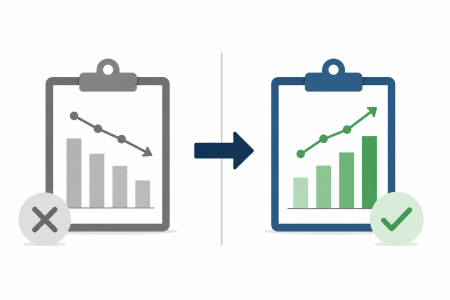
Every field that aims to improve something measures whether the change worked.
Surgeons track outcomes before and after procedures. Engineers test system performance before and after modifications. Educators measure student progress before and after instruction. This is not advanced analytics. It is the minimum condition for knowing whether an intervention made a difference.
In government digital transformation, this step is not always consistently required.
Agencies invest significant resources in modernizing systems, automating processes and improving digital services. Projects are delivered, milestones are met and technical requirements are satisfied. Yet in many cases, there is no formal requirement to demonstrate whether outcomes improved for the people the system is meant to serve.
This is less a question of governance philosophy and more a gap in how procurement defines success.
The Missing Line
There is a relatively simple way to address this gap.
Add one requirement to digital transformation and automation contracts:
Within ninety days of go-live, the vendor shall present a before-and-after comparison of service delivery indicators using existing agency data.
This does not require new systems, new staff or additional budget.
Agencies can identify a small set of indicators they already track, such as processing time, completion rate, error rate or time from application to service delivery, before the contract is signed. These serve as the baseline. Ninety days after implementation, vendors report what changed in those same indicators.
If throughput improved, that is documented. If delays increased, that is documented. If results are mixed, that is documented.
The requirement does not demand success. It demands visibility.
Why This Is Not Yet Standard
Technology procurement has historically focused on inputs and process: whether a system was delivered on time, within budget and to specification. These are important measures. They are not the same as whether the system improved outcomes in practice.
The two questions involve different forms of accountability. One asks whether a system was built. The other asks what the system actually changed.
Both are reasonable. Only one is routinely required.
Vendors are often well positioned to document these changes. They understand the systems they implement and have access to relevant data during deployment. A requirement to present before-and-after comparisons places the responsibility for outcome visibility closer to where the information is generated.
What Happens Next
Once outcome visibility becomes part of a contract, the dynamics of competition begin to shift.
Vendors who can demonstrate measurable improvements gain a clear advantage. Those who cannot are placed at a disadvantage. Over time, before-and-after reporting becomes a baseline expectation, not through regulation alone, but through procurement practice.
Agencies that adopt this approach also gain something more immediate: a clearer understanding of which systems improved service delivery and which did not.
That information has value regardless of what it reveals.
Author: Ping Xu is founder of GFI Flow Intelligence, based in Boston.
 (No Ratings Yet)
 Loading...
Follow Us!