Widgetized Section
Go to Admin » Appearance » Widgets » and move Gabfire Widget: Social into that MastheadOverlay zone

Beyoncé and the Neo-Feminist Movement Part 3—How the Popular Songstress Influences Public Policy and Positive Social Change through the Celebration of Female Empowerment
The views expressed are those of the author and do not necessarily reflect the views of ASPA as an organization.
By Andrew Vaz
September 5, 2025
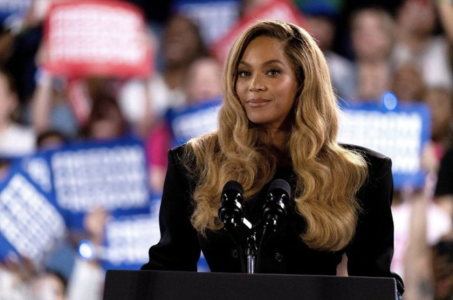
In the third and final piece, Beyoncé and her philosophy will be critically reviewed through a character examination. We already know that her advocacy of social issues is a testament to discipline, hard work, and meticulous attention to detail. She doesn’t just go with the flow—she sets the standard for people to follow. The question we must now address is one involving the character of Beyoncé. An examination must be conducted to explore the motivations of the songstress further.
In the previous columns on this subject, we established that Beyoncé’s message intersects women’s empowerment and autonomy with racial justice for communities of color. Her actions have changed a great deal in how celebrities engage their fanbases concerning politics, and through this, she has become a force for positive social change. Her compassion towards complex social issues (and her own experiences) appears to be the motivation for her brand of activism. These motivations can be found in the actions she has taken to bring black womanhood into the public discourse.
Beyoncé as a Black Woman – Sexuality and Agency
“Equality will only be achieved when men and women receive the same pay and respect.” – Beyoncé
In all her work, Beyoncé presents herself as a confident entertainer, devoted to sharing her experiences of love and achievement through her distinctive brand of storytelling. She engages the viewer in live performances and her music videos. If not presenting hyper-sexualized content or black feminist thoughts, Beyoncé is keen on displaying her identity as a black woman. It appears she seems to understand the challenges that black women face when it comes to their sexuality and the agency over their bodies – the narrative of the stereotype of African American women’s sexuality is rooted in colonialism, sexism, and patriarchy. We can assume Beyoncé takes issue with how black women (like herself) are presented in the male gaze. Beyoncé wants complete agency over her own body; consequently, this would allow other Black women to desire the same level of agency over their bodies.
I believe it is essential to analyze the performances and images of artists like Beyoncé, as her recent performances seem to empower her audience to claim their identity, embrace their sexuality, and act with agency in their intimate relationships. African American women are constantly bombarded with warped images of their physical bodies and sexuality. Some women tilt and bend themselves to fit the distortions they see. To understand why African American women’s public actions and political strategies sometimes seem tilted in ways that accommodate the degrading stereotypes about them, it is important to appreciate the structural constraints that influence their behavior.
Beyoncé as a Feminist… or Womanist?
“I call myself a feminist, although I’ve always been afraid of the term because people read so much into it. But it’s actually quite simple: it’s a person who believes in equal rights for men and women.” – Beyoncé
It can be argued that Beyoncé is more womanist than feminist, insofar as she adopts a more communal and reciprocal stance toward the needs of Black women, their families, and communities. The question here is, “Does Beyoncé’s brand of feminism resonate more with young African American women than previous iterations of feminism?” Womanism is a theory that can explain the experiences of African American women in the context of self, in relationship to Black men, and within the community. It is not the same as feminism, in that feminists want to separate themselves from men, and womanists view their lives in relation to the men who exist in them.
This describes Beyoncé more clearly: she is motivated to include men in her life in a way that supports herself and other women. She loves her husband, Shawn ‘Jay-Z’ Carter, the billionaire hip-hop mogul to whom she has been married since 2008. She also shows admiration for her father, Matthew Knowles. He was her manager for the earlier moments in her career. While this adoration of the men in her life is apparent, Beyoncé also upholds the women who helped carve her path, from her mother, Tina Knowles, to her younger sister, Solange. Let’s not forget the members of Destiny’s Child in each incarnation that had existed since its beginnings within her childhood. All these individuals are important to her and her mindset – they help keep her grounded and humble. Thus, Beyoncé can strike a balance between the male and female dynamics that should exist within the womanist mindset.
Beyoncé (and black women) within the Public Sphere
Eliciting the songstress’s true feelings on various subjects can be a challenging endeavor. She rarely conducts interviews, and she is very selective about what questions she is asked. Beyoncé operates as a benevolent presence in the public sphere, both as an entertainer and as a black woman. She will share her opinions when she deems it is appropriate, but she seems to understand that the views of black women are not always welcomed. She resists public and communal exclusion perpetrated by mainstream society, which negatively impacts black women as individuals. Beyoncé knows that this rejection of self comes from society’s rejection of Black women’s communicative expressions. Thus, Beyoncé uses her platform to address the systemic issues of marginalization experienced by her audience.
Beyoncé redefines both herself and what it means to be a black woman. Beyoncé exhibits rhetorical agency in a manner that enables Black women to redefine themselves, to work on behalf of themselves and their community amid their social realities. That is how she can resonate with her audience – to be one with yourself, knowing what you do and who you are is not enough. You must desire to want and expect more from the world. For Beyoncé, it is okay to be a perfectionist, a feminist, and a businesswoman. I guess you can say she is no longer afraid to be that to which many aspire to be in this life: the ideal.
Conclusion
This character examination highlights the progressive policy motivations behind Beyoncé; in other words, Beyoncé’s contributions to social justice have been beneficial within the public policy sphere. While she may not always receive credit where it is due, Beyoncé has been a fierce advocate for marginalized people. Her work and passion have pushed the issues of gender inequality and racial representation into the mainstream. Our society is forever changed as more women enter politics and demand the very best of our world – the same way Beyoncé does.
Author: Andrew R. Vaz, Ph.D. is a graduate of the Ph.D. in Public Policy and Administration program at Walden University, specializing in Public Management and Leadership. He was already awarded a Master of Philosophy (MPhil) degree in the program. He is also a graduate of the Master of Science in Criminal Justice (MSCJ) and Master of Public Administration (MPA) double master’s program at Florida International University. He can be reached at [email protected].
 (2 votes, average: 5.00 out of 5)
 Loading...
Follow Us!


Kelly Caleb
September 12, 2025 at 2:04 pm
Great article. Interesting thought of womanism versus feminism. I would love to hear your thoughts on Michelle Obama’s influence on these topics.