Widgetized Section
Go to Admin » Appearance » Widgets » and move Gabfire Widget: Social into that MastheadOverlay zone

Bridging Nature and Equity: Advancing Green Infrastructure for Climate Resilience
The views expressed are those of the author and do not necessarily reflect the views of ASPA as an organization.
By Savanna Batson
September 12, 2025
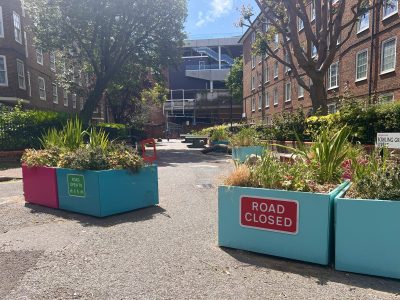
Green infrastructure utilizes the properties of nature to mitigate risk to the built environment and to transform gray infrastructure to better meet the needs of the people who live in each community. Green infrastructure can take many forms including relatively small-scale bioswales, permeable pavement, green medians and residential rain gardens to scaled commercial water reuse systems, constructed wetlands and managed aquifer recharge. Taken together, green infrastructure may be defined as “actions inspired by, supported by, or copied from nature, envisioned to protect, sustainably manage, and restore ecosystems while offering environmental, social, economic and climate resilience benefits” (European Climate Commission 2015).
As such, green infrastructure has many benefits not only for our species but in the context of the Anthropocene to mitigate the catastrophic consequences of human-caused climate change that threatens all orders of life on Earth. Additionally, as the effects of climate change continue to make themselves felt in greater climate variability, increased risk of natural disaster and dramatic shifts from drought conditions to precipitation leading to historic floods, deploying green infrastructure equitably and conscientiously becomes ever more important.
There are many factors to consider when deciding how to design or redesign the built environment, including considerations of weather variability, climate, geography, temperature, cost, maintenance and operations and more. However, as important as the material considerations of infrastructure are the social considerations: what are the key factors influencing success connecting with members of a community, implementing their concerns and recommendations and ensuring the long-term success of green infrastructure? What types of governance best facilitate local public engagement while bringing to bear the specialized technical knowledge such as planning, engineering and architecture required to advance sophisticated infrastructure solutions?
These are questions that scholars and practitioners of green infrastructure must keep in mind if they are to seek not only the environmental benefits of green infrastructure but also greater environmental justice, which is defined by the United States Environmental Protection Agency as, “The fair treatment and meaningful involvement of all people regardless of race, color, culture, national origin, income and educational levels with respect to the development, implementation and enforcement of protective environmental laws, regulations and policies” (para. 2); just as green infrastructure seeks to mitigate the escalating effects of climate change with nature-based interventions, environmental justice demands that historical underinvestment in the environs and infrastructure that serves vulnerable populations be addressed equitably, conscientiously and timely.
This work cannot be accomplished without also recognizing and addressing discrepancies in the differing levels of ability amongst actors to participate in the governance process; as such, this literature review considers epistemic justice to be a critical enabling factor in green infrastructure’s often-stated intent of furthering environmental justice, particularly in the context of the historically unjust distribution of green space in urban areas.
If the upward trend of green infrastructure implementation continues, then land use inequities related to conservation may be a useful point of reference. In that context, leakage, or the displacement of biodiversity-harming human activity to places other than the site of the intervention, has proven difficult to accurately estimate due to low quality trade data, the necessarily wide lens of an interconnected global trade system and boundaries imposed by environmental accounting rules.
In the process of preparing a literature review of green infrastructure around the world, several factors that slow, inhibit or complicate the equitable implementation of green infrastructure emerged. The failure of institutions such as various levels of government and non-governmental organizations (NGOs) to coordinate amongst themselves and with the community in which the project was located or to produce policy that cohered with one another was one key indicator influencing project success.
Lack of trust both between and among actors, which includes community members and groups, NGOs and government at all levels was also heavily cited as a factor that determines green infrastructure implementation success. Interestingly, one of the most crucial means by which trust was or was not built was in the legibility of the description of green infrastructure interventions and policy (Derkzen et al, 2017, p. 116).
An additional factor that complicates the success of green infrastructure implementation is the relative lack of research on rural contexts as opposed to urban contexts; some studies estimate that more than two thirds of coastal populations live in what are classified as small cities or even smaller types of municipality, which has sobering implications for communities that bear inherent differences from urban settings (Mortensen et al, 2024, p. 2).
In summary, while green infrastructure is one effective means of mitigating the effects of the intensifying climate crisis, implementation of green infrastructure risks reifying past systemic injustices without conscientious efforts undertaken to counter these unconscious biases, to engage with and incorporate local community members’ input on the development of projects and to develop innovative new governance processes that reduce inter- and intra-governmental friction and siloing of subject matter experts.
 (No Ratings Yet)
 Loading...
Follow Us!