Widgetized Section
Go to Admin » Appearance » Widgets » and move Gabfire Widget: Social into that MastheadOverlay zone

Considering Gender Sensitivity in Disaster Mobile Application Design
The views expressed are those of the author and do not necessarily reflect the views of ASPA as an organization.
By Zion Dacosta, Lucia Velotti & Maria Agostino
March 13, 2026
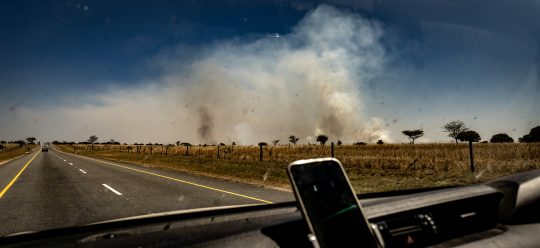
Disasters, whether natural or human-made, can take many forms, including floods, tsunamis, earthquakes, cyclones and wildfires. When these crises occur, they often bring immediate devastation, disruption of services and loss of life. However, disasters do not affect every person in the same way. Vulnerable populations, including those defined by geographic location, social status, economic conditions and gender, often experience the most severe impacts.
Gender, in particular, is frequently overlooked in disaster management planning. As a result, women can face higher levels of risk and disadvantage throughout the disaster management cycle. Globally, women are consistently overrepresented in disaster death tolls and research suggests that women are significantly more likely than men to die in disaster events. Despite this disparity, mobile technology used in disaster management has the potential to reduce these risks if it is designed with gender considerations in mind.
Mobile technology offers a proactive tool that can empower vulnerable populations throughout all phases of disaster management. As disaster management increasingly relies on digital technologies, particularly mobile applications, questions of equity and accessibility become increasingly important. Yet gender inclusivity remains largely overlooked in the design of many disaster-related technologies, which risks reinforcing existing inequalities rather than reducing them.
Many disaster management applications are built around what is described as a “gender-neutral” framework. This framework treats all users the same in an effort to ensure fairness and inclusivity. However, treating all users identically can unintentionally perpetuate inequalities. A gender-neutral approach may ignore the ways gender roles and social norms shape how individuals access information, resources and decision-making opportunities during emergencies.
To address these challenges, disaster mobile technologies should adopt a gender-sensitive framework. A gender-sensitive approach considers how gender roles, cultural expectations and intersecting social identities influence how individuals experience disasters before, during and after a crisis.
Current State of Disaster Mobile Applications
Mobile technology plays a significant role in modern disaster management because it can support communities across all phases of emergency response. In particular, disaster-related mobile applications typically serve three primary functions.
First, they provide early warning systems that allow users to receive alerts about emerging threats. Second, they enable damage reporting, which helps authorities and first responders identify areas with high vulnerability and prioritize assistance. Third, they create two-way communication channels that connect residents directly with emergency services and response organizations.
Most disaster management applications rely on two primary technological approaches: data-oriented systems and communication-oriented systems.
Data-oriented applications collect and analyze large amounts of information from sources such as social media, satellite imagery or user reports in order to generate rapid alerts. Communication-oriented applications focus more directly on interaction between citizens and response systems, including emergency services, healthcare providers, nongovernmental organizations and disaster response agencies.
These communication systems often rely on information provided by residents themselves. In many cases, citizens effectively act as first responders by sharing real-time updates, images or location information during a crisis. This crowdsourced information can help authorities assess damage, identify areas most in need of assistance and coordinate resources more effectively.
Despite their usefulness, these applications are often designed primarily around technical performance and functionality. Evaluations typically focus on what the application can do rather than who it effectively serves. As a result, issues such as gender sensitivity and equitable access frequently receive limited attention in the design process.
The Need for Gender-Sensitive Design
Technological tools are most effective when they prioritize both usability and equity. Achieving this requires moving beyond a gender-neutral framework toward a gender-sensitive design approach.
While gender neutrality treats all users identically, gender-sensitive design recognizes that gender roles, social norms and intersecting identities can shape how individuals receive warnings, access resources and recover from disasters. Factors such as age, disability, economic status and race may also influence how individuals interact with emergency technologies.
A comprehensive framework for disaster mobile applications should therefore consider the vulnerabilities and capacities of all genders. This includes ensuring that early warning systems reach women who may have less access to digital tools or formal decision-making spaces. It also requires recognizing the needs of nonbinary and LGBTQIA+ individuals whose experiences are often overlooked in traditional disaster planning.
Important gaps remain in addressing issues such as digital access, technological literacy, privacy and safety concerns that may affect women and gender minorities differently during crises. Greater attention to gender-aware design throughout the disaster management cycle can help ensure that disaster technologies truly serve all members of the community.
By incorporating gender-sensitive design principles into disaster mobile applications, public administrators and technology developers can help create more inclusive and effective emergency response systems.
Author: Zion Dacosta is an IGEPS Fellow at John Jay College of Criminal Justice. Dr. Lucia Velotti and Dr. Maria Agostino are professors at John Jay College.
 (No Ratings Yet)
 Loading...
Follow Us!