Widgetized Section
Go to Admin » Appearance » Widgets » and move Gabfire Widget: Social into that MastheadOverlay zone
Gender Pay Disparities: What the U.S. Can Adopt from the Global Community
The views expressed are those of the author and do not necessarily reflect the views of ASPA as an organization.
By Erin Sullivan
April 3, 2026
1. Pay Equity Issues in 2026
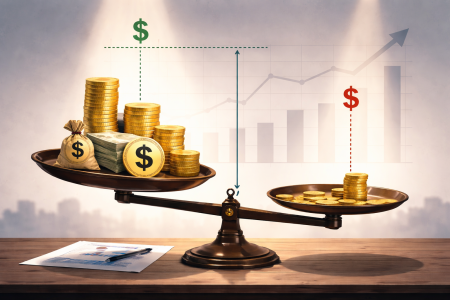
Recent changes within the United States federal government have affected gender equity, including executive orders that ended certain diversity, equity and inclusion initiatives in the public sector. These changes have influenced pay equity laws by weakening some federal protections, accountability measures and enforcement mechanisms. Without strong federal standards, progress toward closing the wage gap largely depends on state-level action and local policy innovation.
Despite decades of U.S. legislative efforts, the gender pay gap continues to persist. Women earn between 76 percent and 81 percent of what men earn. Race compounds this disparity: Black women earn 65 percent, Latina women earn 58 percent, Asian women earn 96 percent, Native American women earn 58 percent and Native Hawaiian and Pacific Islander women earn 67 percent of what White men earn.
Individual states have strengthened equal pay laws, but their effectiveness varies. Some states have taken more progressive approaches to pay equity, such as Illinois’ pay reporting law and California’s equal pay and salary transparency laws. Other states, such as Louisiana, have been criticized for weaker equal pay protections and continue to experience one of the highest pay gaps in the nation. By examining global policy frameworks, U.S. policymakers can identify strategies to address pay inequities more effectively.
2. U.S. State and Local Government Responsiveness
Despite federal policy shifts, some states and local governments have expanded pay equity protections. For example, in 2019 New York City passed Local Law 18, which requires monitoring, analysis and reporting of pay inequities among public service workers. More recently, in 2025, two local bills were passed, Int. No. 982-A and Int. No. 984-A, which require pay data collection and authorize studies to identify disparities in the private sector.
Similarly, California enacted one of the first statewide pay reporting measures in 2020. Through Senate Bill 642, California strengthened its equal pay and salary transparency law by clarifying wage definitions, strengthening accountability standards and expanding remedies for equal pay violations.
Additionally, Illinois amended its Equal Pay Act of 2003 to include gender expression in addition to sex-based protections. Maryland also includes reporting features within its equal pay statute and allows gender identity to be defined through expression rather than biological sex.
3. Global Strategies to Implement in the U.S.
The United States continues to lag behind many developed countries in closing the gender pay gap. Across Europe, the gap ranges from 5 percent to 17 percent. Iceland reports one of the lowest gender pay gaps globally and follows the EU Gender Equality Strategy, which emphasizes pay data assessment, auditing, workplace transparency and equitable wage structures.
Iceland further strengthens these standards through its Equal Pay Standard and laws No. 150/2020 and No. 151/2020. These policies require certification for compliance and impose penalties for violations. The laws also explicitly recognize gender identity and expression, including non-binary gender status.
The United States, at all levels of government, should continue strengthening pay equity laws. Countries such as Denmark, Finland, Norway and Sweden use legal liability, fines and enforcement mechanisms to encourage employer compliance. In the United States, workplace protections for harassment and discrimination advanced significantly only after companies faced legal consequences through lawsuits and class actions during the 1970s and 1980s.
Legislators should ensure that pay equity laws include accountability and transparency mechanisms. The European Union requires member states to publicly report pay gap information. Iceland’s equal pay certification program has coincided with measurable improvements, with the pay gap decreasing from 15 percent in 2017 to 9.3 percent in 2023 after implementation in 2018.
Data collection and public reporting can improve compliance with equity standards. Additional measures such as workplace audits and evaluations of employer compensation practices can further support enforcement.
Across the United States, jurisdictions should adopt stronger pay equity policies modeled after successful international and domestic examples. Illinois and New York City demonstrate how transparency reporting and enforcement mechanisms can support pay equity goals. When governments require employers to collect, analyze and publicly disclose pay data and impose penalties for noncompliance, progress toward pay equity becomes more achievable.
These policy models can guide other states seeking to strengthen pay equity laws. Adopting these strategies can help states avoid weaker policy frameworks and support greater economic fairness while promoting measurable progress toward closing the gender pay gap.
Author: Erin Sullivan (she/her) works in New York State government recovering funds for state institutions through the New York State Department of Law. She is also a practitioner with the Initiative for Gender Equity in the Public Sector (IGEPS). Sullivan holds a B.S. in Criminal Justice and an MPA/PPA, specializing in Criminal Justice Policy and Administration, from John Jay College of Criminal Justice. She has worked in the legal field for 19 years, including 12 years in state government. This policy-focused article was written under the auspices of IGEPS.
 (2 votes, average: 5.00 out of 5)
 Loading...
Follow Us!