Widgetized Section
Go to Admin » Appearance » Widgets » and move Gabfire Widget: Social into that MastheadOverlay zone
Hearing the Hearing Impaired in the Workplace; The Public Administration Challenge
The views expressed are those of the author and do not necessarily reflect the views of ASPA as an organization.
By Joe Jarret
November 17, 2025
Introduction
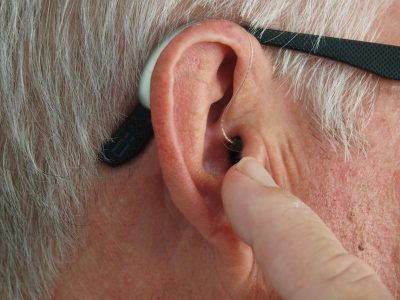
According to the National Institute on Deafness and Other Communication Disorders, approximately 15 percent of American adults report some trouble hearing. People surveyed report a variety of hearing conditions, including deafness, being hard of hearing, experiencing ringing in the ears or having sensitivity to noise. There are many different circumstances that may contribute to individuals becoming deaf, hard of hearing or experiencing other hearing conditions, including but not limited to childhood illnesses, pregnancy-related illnesses, injury, heredity, age and excessive or prolonged exposure to noise. These circumstances can affect the way individuals experience sound, communicate with others and view their hearing conditions. For example, some individuals who develop a hearing condition later in life may not use American Sign Language (ASL) or other common communication methods used by some with hearing conditions or may not use them as proficiently as some individuals who are deaf or hard of hearing at birth or from a very young age.
Considering the number of people who have difficulty hearing, one would presume the public sector workplace is fully equipped to accommodate the hearing impaired. Unfortunately, this is not always the case.
The Challenge
As a linguistic minority, deaf people share many similar life experiences, which manifests into the deaf culture. According to the World Federation of the Deaf, it includes “beliefs, attitudes, history, norms, values, literary traditions and art shared by those who are Deaf.” Also, probably the main aspect of deaf culture is the use of Sign Language as the main form of communication. Deaf culture has many of its roots in the educational background of the community because that is where Sign Languages usually originated and are more broadly assimilated. On top of that, many individuals are introduced to the deaf culture when joining schools for the Deaf since most of them are born into hearing families.
Another important aspect of deaf culture is the idea of deaf gain. It goes against the medical term hearing loss, focusing on all the positive experiences acquired with deafness instead of the sense of hearing that is not present. According to author Ana Sofia Gala, “there is still a lot of discrimination towards deaf people and their culture, caused mainly by lack of knowledge, harmful stereotypes and negative attitudes regarding deafness. We should not need to absorb and obligate deaf people to fall in line with the hearing culture, imposing on them what is easiest for society as it is. What we do need to do is to have societal reforms, with the help of public and private organizations, so deaf people feel more integrated.” As such, it stands to reason that public administrators need to appreciate the fact that deafness is not something that needs to be fixed, it is just a different way for some people to experience life, rooted in a visual world.
Accommodating Hearing Impaired Applicants and Employees
The Americans with Disabilities Act (ADA) requires employers to provide adjustments or modifications called reasonable accommodations to enable applicants and employees with hearing and other disabilities to enjoy equal employment opportunities unless doing so would be an undue hardship, that is, a significant difficulty or expense. Accommodations vary depending on the needs of the individual with a disability. Not all applicants or employees with a hearing condition will need an accommodation or require the same accommodations.
It is important to note that an employer may exclude an individual with a hearing disability from a job for safety reasons only when the individual’s disability poses a direct threat. A direct threat is a significant risk of substantial harm to the individual or others that cannot be eliminated or reduced through a reasonable accommodation. In making a direct threat assessment, the employer must consider:
- the duration of the risk
- the nature and severity of the potential harm
- the likelihood that the potential harm will occur
- the imminence of the potential harm
A Word About Harassment
Employers should make clear that they will not tolerate harassment based on disability or any other protected basis. This can be done in a number of ways, such as through a written policy, employee handbooks, staff meetings and periodic training. The employer should emphasize that harassment is prohibited and that employees should promptly report such conduct to a manager. Finally, the employer should immediately conduct a thorough investigation of any report of harassment and take swift and appropriate corrective action.
Summary
There exist various types of accommodations that public employers may consider using with hearing impaired applicants and employees. Examples include assistive technology such as automated captioning or telephone amplifiers, assistive listening devices, sign language interpreters or simply altering the employee’s non-essential job functions. It is essential to remember that hearing impaired people bring experience, skills and strengths to the workplace every day. Their hearing loss does not define them nor prevent them from performing well.
Author: Dr. Joseph G. Jarret is a public sector attorney, administrator and manager who has served public entities at all levels of government. A former United States Air Force Special Investigator and United States Army Armored Cavalry Officer with service overseas, he lectures on behalf of the Department of Political Science at the University of Tennessee, Knoxville. He holds the B.S. in Criminal Justice, a Master’s in Public Administration, a Juris Doctorate and the Ph.D. in Educational Leadership & Policy Studies. He is a past president of the East Tennessee Chapter of ASPA.
 (No Ratings Yet)
 Loading...
Follow Us!


Jody Cox
November 17, 2025 at 3:18 pm
Government entities should make it common practice to provide some types of accommodations even before they are requested. As an example, enabling and displaying captions on PowerPoint presentations and during online meetings such as Teams and Zoom enable everyone to read what is being said without having to make the request. This benefits everyone including those who may not want to admit they are experiencing hearing loss or in conditions where acoustics are not ideal. It’s simple and doesn’t cost a penny extra!