Widgetized Section
Go to Admin » Appearance » Widgets » and move Gabfire Widget: Social into that MastheadOverlay zone

Hold Your Horses: What Community Leaders Need to Know About Managing Large Animals During a Fire Conflagration
The views expressed are those of the author and do not necessarily reflect the views of ASPA as an organization.
By Roger Gray, Tracy E. Rickman, Ygnacio “Nash” Flores & Don Mason
January 30, 2026
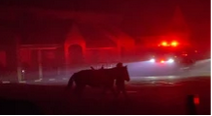
Effective emergency response depends on planning. When hazards present unique challenges, planning must begin with recognizing that those challenges exist. Wildland fires in the wildland-urban interface (WUI) create complex operational demands for both wildland and structural firefighters. Many of these challenges are well understood and mitigation strategies exist. One risk that is less consistently recognized is the presence of horses and other large animals such as mules or donkeys.
Large animals pose distinct challenges for residents and first responders during fast-moving fires. The Eaton and Palisades fires in Southern California in 2025 underscore the need for equine planning and preparation for cascading emergencies. Without advance consideration, the presence of large animals can complicate evacuation, threaten responder safety and increase the likelihood of loss of life.
Emergency planners face several recurring questions regarding animal survival, rescue and recovery during wildland fires. Where are the horses and how many are there? Do equine owners or facilities have the capacity to evacuate all animals quickly? Will outside assistance be required? While training first responders to manage human evacuations is already demanding, many responders lack training in horse behavior and handling. Short-term evacuation facilities for large animals must be identified in advance, designated officially and activated earlier than human shelters to support timely evacuation. Communication is also critical, including ensuring that equine owners and facilities receive evacuation orders clearly and early.
In Southern California, at least four jurisdictional approaches to equine evacuation can be observed, some more effective than others. Coordination between emergency management agencies and local equine communities is a decisive factor. Clear communication channels and predefined roles allow public and private resources to be mobilized efficiently when time is limited. Pre-event mapping of equine facilities and routine collaboration with animal welfare organizations can significantly improve preparedness and reduce confusion during emergencies.
A sanctioned volunteer equine evacuation service, coordinated through the jurisdiction’s animal welfare organization, can be a major asset. Some jurisdictions also maintain evacuation equipment owned by the jurisdiction and funded by equine specialists or public agencies. Trained and uniformed volunteers equipped with appropriate trailers and handling tools can streamline evacuation operations. In some areas, a horse licensing system provides location data and a rough census of the equine population, improving situational awareness.
When emergency operations or animal services agencies lack equine expertise, planning gaps emerge and needed resources may not be secured. Large-scale equine evacuation is a low-frequency but high-consequence element of emergency planning that is often overlooked.
In the absence of formal systems, private social media groups sometimes coordinate ad hoc evacuation efforts. While well intentioned, these arrangements often involve untrained volunteers with no standardized equipment or horse-handling experience. Offered evacuation spaces may be limited in capacity or poorly located relative to the incident. There have been incidents where large numbers of spontaneous volunteers congested WUI roadways, impeding firefighting operations and increasing risk.
Most jurisdictions maintain some level of evacuation preparedness, such as contracts with large animal facilities. However, public-facing animal control guidance often assumes owners can self-evacuate early. Official equine evacuation centers are frequently activated late and only during large incidents. Many facilities under evacuation orders cannot move all animals in a single load, increasing the risk of evacuation refusal or unauthorized reentry. First responders are also placed at risk when encountering loose horses without appropriate training.
In some jurisdictions, emergency managers may not fully understand the number of equines present or even that horses reside within their boundaries. It is not uncommon for small WUI municipalities to have 70 to 120 horses without an active emergency plan addressing them.
Lack of situational awareness about equines and their needs places civilians, firefighters and law enforcement officers at unnecessary risk. Advance planning for equine evacuation is essential and may need to be triggered earlier than human evacuation protocols. Equine owners may require assistance during emergencies, and that support must be integrated into planning. Failure to do so increases the likelihood of preventable loss of life.
Authors: Roger Gray is a CERT and ARES emergency services volunteer who supported the evacuation of 39 horses during the 2025 California Eaton Fire. Dr. Tracy E. Rickman is an emergency management and fire safety consultant and lecturer. Dr. Ygnacio “Nash” Flores and Don Mason are faculty members at Rio Hondo College.
 (1 votes, average: 5.00 out of 5)
 Loading...
Follow Us!


Dr. Frannie Edwards
January 30, 2026 at 8:19 pm
Emergency management of all animals involved in economic activities is an often overlooked planning requirement. Jurisdictions should collaborate with large animal veterinarians to develop a workable local plan for horses, herds of goats, herds of sheep, herds of cattle and similar animal populations. Getting owners involved early is crucial to success.