Widgetized Section
Go to Admin » Appearance » Widgets » and move Gabfire Widget: Social into that MastheadOverlay zone

Lessons from Africa: Could Shared Housing Be the Preventive Solution to America’s Homelessness Crisis?
The views expressed are those of the author and do not necessarily reflect the views of ASPA as an organization.
By Funmi Adebajo
September 15, 2025
Introduction: Framing the Crisis
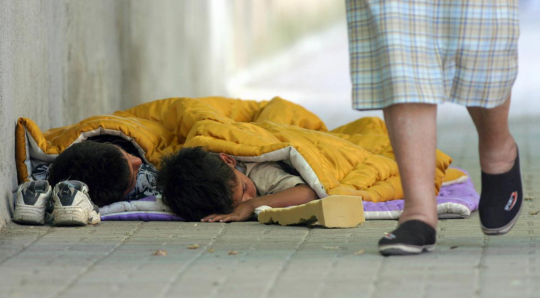
Homelessness in the United States remains one of the most urgent social challenges of our time. On a single night in January 2024, more than 771,000 people were counted as homeless—the highest level recorded since national counts began. Over the past year of researching preventative solutions, I have interacted with at least 200 unsheltered individuals in Camden County, New Jersey, listening to stories and connecting people to resources.
Behind the numbers are families displaced by rising rents, children living in cars, veterans struggling with addiction, and individuals navigating co-occurring disabilities. These encounters raise a critical policy point: prevention, not just emergency response, must become the centerpiece of America’s housing strategy. Drawing on both African communal traditions and U.S. policy innovations, I argue that shared housing offers a replicable, trauma-informed, and cost-effective approach to preventing homelessness before it begins.
Lessons from Africa: Communal Living as Prevention
Across much of Africa, communal living is more than tradition—it’s a resilience strategy. Families routinely extend their homes to relatives, neighbors, or strangers. This is not charity but a practical survival mechanism ensuring individuals are not left without food, shelter, or protection. I vividly recall when a cousin, daughter of an uncle we had not seen in years, arrived at my great-grandmother’s house. After introductions, she was given food and a place to sleep among many visiting great-grandchildren, no DNA test required.
America’s individualism makes this durability rarer. For example, an 83-year-old woman I met lost her home to fire and now lives in her car yet visits her children and babysits their grandchildren from her vehicle.
Communal systems such as cohousing and shared support have prevented countless displacements in Africa. This cultural practice has clear policy relevance in the American context where rising rents, limited affordable housing, and fragmented support systems have increased homelessness risk.
Formalizing shared housing in federal and local policy frameworks offers a way to replicate this resilience model to build prevention into housing strategy.
Implementing Shared Housing
The U.S. Department of Housing and Urban Development (HUD) defines shared housing as an arrangement where unrelated individuals live together in one home, maintaining private bedrooms while sharing common areas. This model lowers costs by distributing rent and utilities, stretches limited housing stock, fosters community integration, and interrupts cycles of homelessness before they take root.
Yet the model remains underutilized because of stigma, zoning restrictions, and limited public messaging. Still, evidence shows its value. Supportive housing models, including shared housing, reduce reliance on costly emergency services by as much as 30% generating significant public savings.
Scaling shared housing requires coordination among landlords, municipalities, nonprofits, and community members. Landlord hesitancy, often rooted in cultural norms and privacy concerns, is a major barrier. But targeted incentives have also worked in various states. The Philadelphia and Delaware Housing Authorities, for instance, have encouraged participation by offering signing bonuses and guaranteed rent through vouchers. With the right mix of financial tools and public messaging, shared housing can overcome stigma and gain traction.
Early interventions are particularly valuable for youth aging out of foster care. Research shows that between 31 and 46 percent will experience homelessness by age 26 (Sevita Blog, 2025; U.S. Interagency Council on Homelessness, 2023). Tailored pilots for this group can prevent housing loss and refine shared housing models before scaling nationally.
Local nonprofits have also shown what is possible. In Camden County, Senior Citizens United Community Services (SCUCS) operates a shared housing program rooted in the belief that “everyone has a room to offer—even if they don’t recognize it.” Such models prove that prevention can succeed when embedded in community trust.
The lesson for America is clear: the root cause of homelessness is not individual failure but scarcity of affordable housing. Between 2021 and 2023, median rents rose by $450 while household incomes grew only $175 (Data USA, 2023). Shared housing provides a path for low-income households to stabilize in the face of rising costs.
Rethinking the Data: Why the PIT Count Falls Short
For prevention models to succeed, policymakers must also address flaws in how homelessness is measured. The annual Point-in-Time (PIT) Count, HUD’s primary tool, captures only those visible in shelters or on the streets on a single January night. Families doubling up with relatives, couch surfing, or in hidden encampments are routinely excluded.
This undercount skews baselines, underestimates resource needs, and risks starving prevention models of funding. A mixed-methods approach is essential, integrating PIT with school district records, eviction filings, Medicaid data, and year-round outreach by service providers. Only with accurate data can programs like shared housing be properly scaled.
National and Global Policy Implications
Nationally, shared housing is already an allowable option under HUD’s continuum of care yet it remains underutilized. Elevating it from a permissible model to a prioritized prevention strategy would reduce reliance on shelters and expand trauma-informed housing. By framing shared housing as prevention, policymakers can align investments with long-term stability rather than short-term crisis management.
Globally, this approach resonates with the United Nations Sustainable Development Goals (SDGs), particularly SDG 1 (No Poverty), SDG 10 (Reduced Inequalities), and SDG 11 (Sustainable Cities and Communities). American leadership on shared housing can strengthen multilateral dialogues on poverty alleviation, demonstrating how cultural resilience models like Africa’s communal living can enrich U.S. innovation.
Conclusion: Shared Housing as a Preventive National Strategy
Homelessness is not inevitable; it is a policy challenge with solutions. Shared housing offers a cost-effective, trauma-informed approach that interrupts the cycle of intergenerational homelessness.
To scale this model, policymakers must normalize shared housing, incentivize landlords, strengthen tenant supports, reform restrictive zoning, and improve data collection. By doing so, the U.S. can reduce dependence on emergency shelters, align with the SDGs, and affirm housing as a preventive public good.
Shared housing is not merely a shelter solution, it is a poverty prevention strategy with national and global relevance.
Author: Funmi Adebajo is a graduate student in Public Administration at Rutgers University-Camden. She previously led education, economic empowerment and gender-based response programs in underserved communities in Nigeria. Her work focuses on developing solutions to urban poverty, governance and community-centered policy reform across the U.S. and Africa. She can be reached at [email protected]
 (No Ratings Yet)
 Loading...
Follow Us!