Widgetized Section
Go to Admin » Appearance » Widgets » and move Gabfire Widget: Social into that MastheadOverlay zone
Maintain Federal Oversight of the Federal Employee Viewpoint Survey (FEVS)
The views expressed are those of the author and do not necessarily reflect the views of ASPA as an organization.
By Bill Brantley
September 19, 2025
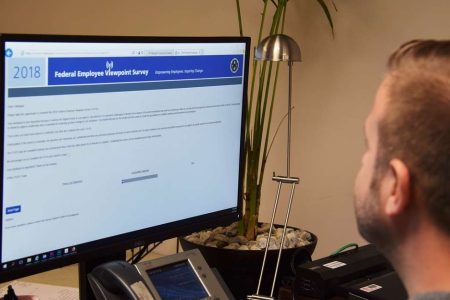
In 2025, the Office of Personnel Management (OPM) canceled the Federal Employee Viewpoint Survey (FEVS) for the first time despite a legal requirement for annual surveys. OPM paused the survey to update its content and address new priorities. This move concerned many in public administration as agencies lose feedback, oversight loses transparency, and employees lose a key way to express concerns.
This is a crucial moment. Federal leaders should reaffirm commitment to the FEVS and keep its administration within the federal government to protect accountability, comparability and employee trust.
A Brief History and FEVS’ Purpose
The FEVS began in 2002 as the Federal Human Capital Survey, created by OPM to assess if government workplaces had effective organizational practices. In 2004, United States Congress required agencies to ask 16 core questions each year. Renamed FEVS in 2010, the survey is now conducted annually with over a million employees invited and hundreds of thousands responding. Its goal remains to give leaders insights into improving organizational health and performance.
Overview of the FEVS
The Federal Employee Viewpoint Survey (FEVS) serves as a management tool for assessing various aspects of the federal workforce.
- For managers, FEVS results indicate whether employees feel empowered, supported and able to achieve agency objectives. This data allows supervisors to identify areas for improvement in communication, training or resource allocation.
- For agency leaders, the survey offers an organization-wide perspective on engagement, morale and leadership. Agencies may use FEVS dashboards to measure progress, develop action plans and guide cultural initiatives.
- For oversight bodies such as the Government Accountability Office, the Office of Management and Budget and Congress, FEVS data provides insight into workforce conditions that influence mission delivery.
- For employees, the survey is a confidential mechanism for providing feedback. Research indicates that employee engagement relates to productivity and commitment; the FEVS measures engagement and communicates that employee perspectives are considered.
In summary, the FEVS functions as a reporting system for workforce metrics within the government.
The 2025 Cancellation: Flying Blind
The cancellation of the 2025 FEVS has resulted in agencies lacking essential data. Historically, even during significant disruptions such as the COVID-19 pandemic in 2020, OPM chose to delay rather than cancel the survey. This unprecedented decision introduces both legal considerations due to statutory requirements and practical challenges concerning agency improvement in the absence of employee feedback.
Max Stier, representing the Partnership for Public Service, noted that numerous agency leaders rely on FEVS data to drive enhancements in employee engagement and overall performance. Suspending the survey interrupts these established cycles of evaluation and development. Don Kettl, a recognized expert in public administration, cautioned that the decision to cancel may indicate a broader reluctance to collect potentially challenging data. Disrupting the continuity of the FEVS process could jeopardize accountability by depriving agencies of crucial insights into retention, morale and organizational transformation.
Why the Federal Government Must Administer the FEVS
While some have proposed that agencies or external contractors could assume responsibility for administering the FEVS in place of OPM, such a change would not be advisable.
- Consistency and Comparability: Centralized administration by OPM enables all agencies to be evaluated using identical questions and methodologies, facilitating meaningful comparisons and robust trend analysis. Decentralizing this process would fragment data and compromise comparability.
- Efficiency: OPM possesses the necessary scale and expertise to conduct the survey among 1.5 million employees. Dividing this responsibility among multiple agencies would likely waste resources and diminish overall data quality.
- Confidentiality and Trust: OPM’s role as a neutral third party assures employees their responses are secure and free from potential misuse or retaliation. Transferring survey administration to private companies or contractors risks undermining participant candor and engagement.
- Legal Mandate: Federal law mandates an annual employee survey with specific required questions, a responsibility assigned to OPM. Reassigning this duty could jeopardize statutory compliance.
The integrity of the FEVS is contingent on its administration by the federal government. Outsourcing or decentralization would damage employee trust and compromise the survey’s effectiveness.
Modernizing the FEVS
Modernization shouldn’t mean canceling the FEVS; OPM should enhance its foundation by:
- Pulse Surveys: Use brief, frequent check-ins to provide timely feedback on topics like telework or information technology.
- Faster Data Delivery: Expand interactive dashboards for faster, nearly real-time access to results.
- Advanced Analytics: Apply deeper analysis to comments and map engagement for better workforce insights.
- Updated Question Design: Regularly refresh questions to address new workplace trends, keeping essential items for comparison over time.
These improvements would make the FEVS more agile and actionable without compromising its rigor or comparability.
For over 20 years, the Federal Employee Viewpoint Survey (FEVS) has provided essential insights into the government workforce. The 2025 cancellation was a notable setback, highlighting the need for reliable workforce data. Moving forward, FEVS should continue under OPM to ensure consistency and legal compliance. The survey process should be adapted with pulse surveys, quicker feedback and enhanced analytics.
Federal employees deserve a voice and agencies must be equipped to improve performance. FEVS is crucial for informed leadership and agency effectiveness; it must remain federal, robust and up to date.
Author: Bill Brantley is the President and Chief Learning Officer for BAS2A, an instructional design consultancy for state and local governments. He also teaches at the University of Louisville, the University of Maryland and Franklin University. His opinions are his own and do not reflect those of his employers. You can reach him at https://www.linkedin.com/in/billbrantley/
.
 (2 votes, average: 5.00 out of 5)
 Loading...
Follow Us!