Widgetized Section
Go to Admin » Appearance » Widgets » and move Gabfire Widget: Social into that MastheadOverlay zone
Martin Luther King Jr. and the Moral Responsibilities of Public Administration
The views expressed are those of the author and do not necessarily reflect the views of ASPA as an organization.
By Malcolm K. Oliver
January 16, 2026
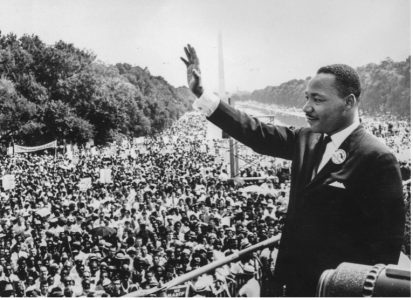
Martin Luther King Jr. Day is often seen as a time to remember his legacy, but for public administrators, it should also be a moment for professional reflection. King taught that injustice is not just the result of individual bias; it is embedded within systems, policies and institutional routines. His critique targeted not only elected officials but also the institutions and practices that turn public values into real-world outcomes. For those who work in government, King’s legacy poses a critical question: What responsibilities do public administrators have when policies and procedures lead to unequal results?
This question lies at the heart of public administration’s intellectual reckoning in the late 1960s. At that time, scholar H. George Frederickson challenged the long-held belief that administrative action could or should be ethically neutral. He argued that the field had become overly focused on efficiency and cost savings, often overlooking fairness and justice. Frederickson warned that administrative decisions inevitably determine who benefits from government and who does not. In this context, neutrality is not a safeguard but a moral blind spot.
Frederickson rejected the view of administrators as passive technicians carrying out policy without accountability for its consequences. Instead, he highlighted that administrative discretion plays a central role in shaping social outcomes and public trust. The legitimacy of public administration, he said, depends not only on managerial skill but on whether organizations actively promote democratic values and social equity. This idea closely echoes King’s insistence that justice must be pursued through concrete institutional action, not mere rhetoric. Seen in this light, MLK Day reminds us that public service carries an inherent moral responsibility.
Later reflections place Frederickson’s arguments within a broader period of institutional strain marked by racial unrest, eroding trust in government and doubts about administrative capacity. Scholars like Donald Kettl describe this time as a crisis of purpose for public administration, when traditional tools failed to address systemic inequality. Frederickson’s call for a “new public administration” was more than a critique of management techniques; it was an effort to revive the field’s spirit by linking effectiveness and efficiency with a clear commitment to equity.
One of Frederickson’s lasting contributions was giving public administration a language to confront injustice. As Mary Guy observed, social equity became more than an abstract ideal because Frederickson helped name inequities in access, process, quality and outcomes. Language here is not just cosmetic; it is a lever for change. Without a shared vocabulary for equity, public organizations risk confusing efficiency with justice and data with moral clarity. Asking who benefits from policy reframes public service as an ethical practice grounded in judgment, narrative and professional responsibility.
Yet, as recent scholarship on civil rights and public sector values shows, adopting the language of equity is only a first step. Susan T. Gooden, Richard Greggory Johnson III and RaJade Berry-James stress that civil rights remain an ongoing administrative duty, not a settled achievement. Persistent racial and social inequities across policy areas reveal how easily institutional routines can reproduce injustice, especially during crises and upheavals. The gap between stated values and lived outcomes underscores how much work remains for public administrators committed to fairness and justice.
Ultimately, Martin Luther King Jr. challenges public administrators to view their work not merely as technical problem-solving but as a moral vocation dedicated to the common good. Laws and policies do not implement themselves; they rely on institutions and individuals willing to act with intention and courage. Neutrality offers no refuge when systems produce unequal outcomes. Honoring King’s legacy means recommitting to public administration as an active expression of moral responsibility in pursuit of a more just society.
Author’s Note
This essay is informed by foundational and contemporary public administration scholarship, including H. George Frederickson’s Toward a New Public Administration; the collective reflection on Frederickson’s legacy by Melvin J. Dubnick, Mary E. Guy, Donald F. Kettl, Pan Suk Kim and Rosemary O’Leary in Perspectives on Public Management and Governance; and recent work on civil rights and public sector values by Susan T. Gooden, Richard Greggory Johnson III and RaJade Berry-James published in Public Administration Review.
Author: Malcolm K. Oliver, Ph.D., MPA, is dean of the John S. Watson School of Public Service at Thomas Edison State University and an active member of ASPA focused on ethics, equity and public leadership. He can be reached at [email protected].

 (6 votes, average: 4.83 out of 5)
 Loading...
Follow Us!