Widgetized Section
Go to Admin » Appearance » Widgets » and move Gabfire Widget: Social into that MastheadOverlay zone
Reframing Discipline
The views expressed are those of the author and do not necessarily reflect the views of ASPA as an organization.
By Thomas E. Poulin
July 14, 2025
Public administrators are charged with providing effective, efficient and responsive services in a professional, unbiased manner. Managing and coordinating multiple employees working in multiple work locations involves ensuring activities are aligned with the mission and conducted properly. This requires leadership, and leadership requires effective, appropriate disciplinary practices.
Too often, discipline is viewed as an entirely negative act involving the application of official power on employees. Fundamentally, discipline should be viewed as ensuring people are moving in the right direction, not straying too far. Discipline may be viewed as a form of organizational justice, but there are many forms of justice. Each approach is subtly different in intent and outcome. The question is which form of disciplinary justice is best suited to achieve the aims of agency leadership. Using an inappropriate form of justice, even if unintentionally, can harm motivation and morale, shatter interpersonal relationships of trust and respect and hinder the ability of the agency to provide optimal services.
Retributive Justice: This form of justice focuses on punishing an offender. It concerns itself with sending a warning message as opposed to correcting behaviors. In many organizations, this has become the norm. A rule is broken and an individual is punished. If this is the sole approach to organizational justice, it can make all employees risk-averse. Some managers might grow to believe they will be viewed more favorably by senior leadership the more they apply discipline.
Procedural Justice: This form of justice focuses on organizational due process. The focus is on fair, impartial decisions based primarily on compliance with written policies and procedures including union contracts. There is value in following disciplinary procedures in a consistent manner, but it is impossible for any written rule to cover all circumstances. This might contribute to discipline based on technicalities, failing to consider the totality of the circumstances including unexpected events and the employee’s performance record.
Restorative Justice: This form of discipline pursues a means for the offender to repair the harm they have caused. This approach has value, but the time and cost of repair to damage might be prohibitive for lower-paid employees. They tend to have less discretionary time at work and fewer personal financial resources. Additionally, in most modern agencies, it is difficult to fully isolate the performance of an individual. This might contribute to a single lower-level employee bearing the majority of the punishment, leaving their superiors untouched for concerns created by systemic flaws. This contributes to a sense of inequity in how senior and junior employees are disciplined.
Redistributive Justice: This involves ensuring fairness and equity across the organization in accountability and discipline. A concern for inequities in the application of discipline was noted with both restorative and procedural justice. Even if this is the unintentional result of agency leadership, or if it is a perception and not reality, a sense that discipline is unfairly applied can harm trust and respect in the workforce, contributing to a weaker organizational culture and thereby diminishing performance.
Distributive Justice: This form of justice is characterized by workplace burdens and benefits being shared unequally across the agency. This approach might involve favored employees receiving newer equipment, being favored in selection for training and special projects or being more likely to receive rewards. This form of disciplinary justice might contribute to the emergence of organizational cliques, marginalizing many employees. This can damage morale and motivation, diminish trust and respect and contribute to sub-optimal performance.
Rehabilitative Justice: This form of discipline seeks to change the attitudes and behaviors of those who have performed sub-optimally, creating a more motivated, more productive employee. This form of disciplinary justice uses just enough application of force to keep those on track, combined with coaching and mentoring, with the goal of developing self-discipline in the employee.
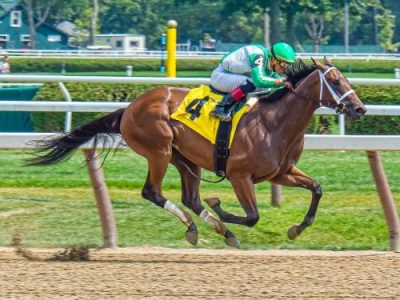
From both practical and ethical perspectives, the focus of any discipline should be to correct behaviors and ensure focused performance. A useful analogy for this might be thoroughbred horse racing. The horses are carefully selected and trained; they know what to do and how to do it. The jockey is there to guide and support, not to force behaviors. The reins are held loosely by the jockey, letting the horse do what it does best. If the horse begins to stray, the jockey uses just enough tension on the reins to correct performance, letting the reins go loose again once optimal performance is again achieved. Self-discipline has been created through rigorous training and reinforcement of both horse and rider.
Public agencies face unlimited challenges with limited resources. In pursuit of accomplishing the mission, public administrators must make optimal use of employee performance. This requires them to ensure performance remains on track, and this requires discipline. The form of disciplinary justice favored by agency leadership creates the framework for discipline in that agency. Selecting the appropriate framework promotes excellence. Selecting an inappropriate framework might harm the agency and the community.
Author: Thomas E. Poulin, PhD, SHRM-CP, PSHRA-CP, is a training and development consultant and part-time public administration faculty at Columbia Southern University. He served in local government and non-profits for more than 30 years and has taught public administration and related topics for over 20. He may be reached at [email protected].

 (3 votes, average: 4.67 out of 5)
 Loading...
Follow Us!