Widgetized Section
Go to Admin » Appearance » Widgets » and move Gabfire Widget: Social into that MastheadOverlay zone
Remembering Mike Levine: A Champion for Human Rights and Public Service
The views expressed are those of the author and do not necessarily reflect the views of ASPA as an organization.
By Stephen R. Rolandi
July 14, 2025
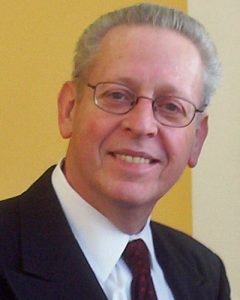
In recent years in the United States and elsewhere, the issues of liberty and freedom in a democratic society have been receiving much attention. Earlier this year, a former boss, colleague, mentor and friend of mine in government and higher education, Michael Elliott Levine, passed away after a long illness at the age of 81. I knew and worked with Mike professionally for over 30 years.
Mike Levine had a remarkable career not only in local government, education, historic preservation, urban planning and community development but also in the field of human rights. For that reason, I decided to devote this month’s column to an examination of his life and varied accomplishments in the arenas of public service and human rights.
About Mike Levine
A native of Brooklyn, New York City, Michael was born in May 1943 in the Crown Heights section of Brooklyn into a modern Orthodox Jewish family. His family traced its lineage to modern-day Russia and Belarus. Mike attended local schools and earned a bachelor’s degree in political science and sociology as well as a master’s degree in urban planning, respectively, from Hunter College of the City University of New York (CUNY). He was one of the first graduates of Hunter College’s renowned urban planning program.
It was here at Hunter that Mike developed a lifelong passion for urban affairs. As a field of study, urban affairs encompasses the study of cities and their surrounding regions, focusing on the social, economic, political and cultural aspects of urban life. His special area of interest was New York City, specifically how cities develop and grow. He took a particular interest in the Greenwich Village section of Manhattan.
Following graduation, Mike was hired as a junior planner for the Department of City Planning (the department was created in 1938 as the staff agency to the New York City Planning Commission, whose charter mandate is to plan and advise for the orderly growth and development of the City of New York).
This was the start of a 30-year career where he assumed increasingly responsible staff and managerial positions including Director of Planning Studies and Director of Administration (it was in the latter position that I reported to him as the agency’s fiscal officer and budget director). Following his retirement from City Planning, Mike served as a planning consultant to Manhattan Community Board 1 and the Fund for the City of New York, as well as an instructor in sociology and planning at Pace University.
Mike Levine and Human Rights/LGBTQ Activism
In several oral histories, Mike described his “coming out” as a gay man in New York City during the late 1960s. He thrived in his graduate planning studies at Hunter, and this presented his first opportunity to meet other gay people, particularly at gay bars in Manhattan. The Stonewall Inn (located at 51-53 Christopher Street in Manhattan) soon became one of his favorite meeting places. It was at the Stonewall Inn where Mike was involved as a participant/witness on June 28, 1969 when local police raided the bar, resulting in several nights of protest and sporadic violence (note: the bar is now a national-designated historic landmark).
These events inspired activism around the nation on behalf of gay persons and led to the formation of dozens of groups seeking political, legal and social equality and acceptance. It was also a formative moment in his life.
While Mike’s career at City Planning flourished, he started to become more active in religious and community affairs in Lower Manhattan. He became a founding member of the Congregation Beth Simchat Torah (CBST), and from 1978-81, served as CBST’s president. He subsequently served in various other roles at CBST including board secretary, board chairman and parliamentarian as well as president of the World Congress of GLBT Jews. He also became active with the American Planning Association (APA), the national professional association that represents the field of urban and regional planning in the United States. His leadership roles with APA included service as the chapter’s planning coordinator and co-chair of its national conference committee.
Mike Levine and Public Service
I had mentioned earlier that Mike Levine’s public service career was spent entirely with the Department of City Planning (DCP). Mike was instrumental in the landmark designation of the Greenwich Village Historic District as well as pioneering zoning and landmark designations for SoHo. As Director of Administration, he was heavily involved with City Planning’s relocation to new headquarter offices in 1987 and DCP’s celebration of the 50th anniversary of its founding in 1988.
When I joined the department’s staff in 1987 and began to assume more of a leadership role in ASPA, Mike saw value in collaboration with the public administration community of New York City and the New York City metropolitan chapters of both ASPA and APA co-sponsored several successful joint programs on strategic planning, charter revision and professional development.
Mike’s career embodied an unwavering commitment to historic preservation, planning, community advocacy and enriching New York City’s diverse neighborhoods. Not only was he well respected, he was well liked. He surely will be remembered as mentoring future generations of urban planners and leaders. He was a trailblazer, model urban planner, beloved community leader and an exemplar of public service and human rights.
Requiescat in pace.
Postscript:
I would like to acknowledge with thanks the following sources as contributions used in the preparation of this article: American Planning Association, New York Metro Chapter; Senior Minister Emerita Rabbi Sharon Kleinbaum; and Mr. Rick Landman, Adjunct Professor, New York Law School.
Readers of this column may also be interested in two oral histories of Mike Levine’s life and career which can be found at: Greenwich Village Society for Historic Preservation (www.villagepreservation.org) conducted in 2020; and the LGBTQ Religious Archives Network (www.lgbtqreligiousarchives.org) conducted in 2021.
Author: Stephen R. Rolandi retired in 2015 after serving with the State and City of New York. He holds BA and MPA degrees from New York University, and studied law at Brooklyn Law School. He teaches public finance and management as an Adjunct Professor of Public Administration at John Jay College of Criminal Justice (CUNY) and Pace University. Professor Rolandi was recently elected to a term as Trustee of NECoPA and the New Amsterdam History Center; he is President-emeritus of ASPA’s New York Metropolitan Chapter and past Senior National Council Representative. He has served on many association boards, and is a frequent guest commentator on public affairs and political issues affecting the nation and New York State. He can be reached at: [email protected] or [email protected] or 914.441.3399 or 212.237.8000 (messages).

 (2 votes, average: 2.00 out of 5)
 Loading...
Follow Us!


Prof. Stephen Rolandi
July 16, 2025 at 4:48 pm
7/16/2025
Rick, thanks for your comments. Mike is gone, but he is not forgotten. I hope his life and career will be an inspiration for young people to consider public service an civil rights as career options.
SR
Rick Landman
July 15, 2025 at 2:10 pm
I was Michael’s friend since around 1977 when we both worked at 2 Lafayette Street, and he was a leader at CBST and CB#2 when I was member. Our lives were intertwined throughout since then. When he was the President of CBST he let us use the space to hold the community planning meeting to create the First March on Washington for Lesbian and Gay Rights on October 14, 1979. He was often behind the scenes on getting things done. He was highly educated, kind, and proficient in everything he did. I can still hear his voice and I miss him a lot.