Widgetized Section
Go to Admin » Appearance » Widgets » and move Gabfire Widget: Social into that MastheadOverlay zone

Resilience, Relationships, and Responsibilities: Echoes of the Hurricane Katrina Disaster in Current Politics and Administration
The views expressed are those of the author and do not necessarily reflect the views of ASPA as an organization.
By Nathan Myers
December 8, 2025
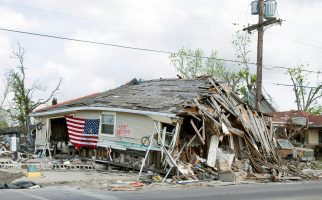
The U.S. recently passed the 20th anniversary of the flooding of New Orleans, one of the most costly humanitarian disasters, in terms of both lives and property, in the history of the United States. While this event still holds a prominent place in the American psyche, the U.S. has certainly seen many other severe weather-related emergencies since Katrina. Many argue that the terrible tolls created by hurricanes and flooding, including Katrina, do not constitute natural disasters because the factors creating the worst effects for people are based on human decisions. With this in mind, there are many lessons scholars and practitioners of public administration can draw from the failures of the Katrina response. Among these are:
1. How pre-existing vulnerabilities in a region’s population can multiply the effects of a disaster
Those who suffered the most in the wake of the flooding of New Orleans following Hurricane Katrina were those who were not able to evacuate because they lacked the transportation and financial means to do so. This lends credence to the maxim that disasters are not natural, as hazards become disasters due to policy created by people. Inadequate effort was made to address socioeconomic vulnerabilities prior to the emergency, inadequate planning was done to assist the vulnerable, and the response to their plight was both delayed and inadequate. One can see echoes of this in the recent federal government shutdown, with key social safety net programs like the Supplemental Nutrition Assistance Program (SNAP) allowed to lapse, even if only during a relatively brief period. Meeting people’s basic needs on a consistent basis is vital not only for humanitarian reasons, but because one never knows when an emergency will strike and explode the crisis.
2. Strong intergovernmental relationships and collaboration are important for emergency response
Critics of the Hurricane Katrina response have noted that the response to the flooding of New Orleans was hindered by poor communications between leaders at the federal, state and local. The federal government failed to proactively reach out to state officials with offers of assistance, and Governor Kathleen Blanco did not request such assistance directly from President George W. Bush. There was a similar lack of direct contact between Governor Blanco and New Orleans Mayor Ray Nagin that hindered the coordination of the response on the ground and addressing community needs. There are echoes of this today in regard to the intergovernmental tensions at the federal, state and local levels regarding deportation policy and deployment of the National Guard to American cities. As one example, President Trump and Illinois Governor J.D. Pritzker have openly exchanged threats and insults over these issues. Meanwhile, Texas Governor Greg Abbott has feuded with mayors in his own state over deportation and other issues. While there are certainly examples of politicians being able to put political differences aside in the midst of an emergency (see the response to Superstorm Sandy in New Jersey in 2012), the sort of open and vitriolic hostility exhibited by politicians recently could also hinder timely requests for assistance and the granting of same. While political differences are unavoidable, it is important for executives at all levels to make sure that there are good lines of communication between their emergency management personnel and that appropriate planning and preparation measures are taken.
3. It is important that emergency management leadership is adequately qualified and engaged.
In the midst of the Hurricane Katrina response, FEMA Director Michael Brown was criticized for his lack of engagement in the response and general lack of experience working in the emergency management field. Brown subsequently resigned his position. Recent Acting FEMA Director David Richardson resigned his position in November 2025 (before he could be forced out) after similar criticisms of not being sufficiently responsive to emergencies (such as the flooding in Texas in July 2025) and lack of adequate knowledge regarding risks. A notable difference in Richardson’s case is that the Trump administration is actively investigating significant changes to FEMA that could substantially reduce its national role, leaving more responsibility to state and local governments. Therefore, it is less clear whether Richardson’s resignation is part of an effort to improve agency performance, or rather to remove a target for congressional criticism from the administration. Regardless of the Trump administration’s motivation for removing Richardson, experience clearly shows that placing unqualified individuals in top emergency management positions inevitably leads to political headaches for an administration. For the American people, it can mean unnecessary loss of life and property.
All three of these points speak to the need for federal, state and local leaders to do all they can to build and maintain community resilience on a continual basis because we never know when the strength of these communities will be tested. Citizens need to have their basic needs met and most severe vulnerabilities addressed, while political leadership needs to have good working relationships, as well as the knowledge and desire to take on emerging challenges. If we make budget-cutting and scoring political points a priority over ensuring the preparedness of the American people, history shows we will pay a terrible price.
Author: Nathan Myers, Ph.D. is a Professor in the Department of Political Science and Director of the Master of Public Administration at Indiana State University. His areas of research include public policy, public health emergency preparedness, and community resilience. He is the author of Pandemics and Polarization: Implications of Partisan Budgeting for Responding to Public Health Emergencies and numerous related articles. Myers is a graduate of Knox College (BA), University of Illinois at Springfield (MPA), and University of Nevada, Las Vegas (Ph.D.) Email: [email protected]; Blue Sky: @nagremy1980.bsky.social
 (No Ratings Yet)
 Loading...
Follow Us!