Widgetized Section
Go to Admin » Appearance » Widgets » and move Gabfire Widget: Social into that MastheadOverlay zone

Shut It Down, Shut It All Down: The Hidden Pitfalls of Government Shutdowns
The views expressed are those of the author and do not necessarily reflect the views of ASPA as an organization.
By Troy Chavez
November 24, 2025
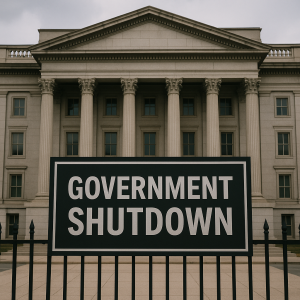
Government shutdowns are majorly political exercises. But they deeply affect administrators and officials when they are in full swing.
We could easily analyze the political ramifications and strategies attached to a shutdown but they usually hinge on subjective, emotionally charged and narrow budgetary disagreements. It’s hard to ever say that a government shutdown is “justified.” Therefore, understanding its consequences gives us the stakes at play and who is ultimately “affected.”
What’s a “Government Shutdown”
Since 1976, when the federal budget process modernized, there have been ten government shutdowns and twenty-one funding gaps in total. The one that just concluded in November 2025 is the longest to date, lasting forty-three days. But what happens when all the hoopla becomes muted groans?
A “government shutdown” refers to the federal government although it affects states and localities too. It occurs when there is an impasse within the federal budget process. It is usually used as a tactic to push one political side to their preferred goals. The reasons differ greatly on the political winds sailing and are not always clear.
Nevertheless, they are felt across the nation. If we think of it in economic terms, its basic input/output suddenly shuts down. This happened during the pandemic. Many elements were stunted and people had to halt nearly all public functions. We often twirl in our heads that government is simply a machine and in some ways it is, but it functions similar to an economy. When it shuts down, economic and financial markets and services collapse. Government is not merely a compilation of papers and documents, it’s an amalgam of people, services and economic stability.
Technically Speaking
The Antideficiency Act is the core law behind a shutdown. The law stops money from being used by federal agencies without an appropriation from Congress. Agencies need authority to spend the money. It is like the gas company turning the valve off and on again. It is a way to manage flow. And when that flow isn’t directed, agencies no longer have the authority to spend that money, resulting in a game of “red light/green light.” Spending any of that money during this period is considered a criminal offense under the ADA.
Shutdowns are more than symbolic political theater; they have legal implications and consequences for administrators and society.
Workforce
On top of the legal swords to parry, workers also can be temporarily suspended or furloughed. However, there are some roles that require continuing under the shutdown. Agencies must classify between “Excepted Employees” or “Non-Excepted Employees.” Do they get paid? No. But they cannot stop working.
Examples of Excepted Employees are ones that protect life, protect property or maintain emergency operations. Some jobs and sectors include border agents, TSA, air traffic controllers, VA hospital staff and some national security roles.
Non-Excepted employees are administrative staff, analysts, grant managers, program coordinators, research personnel and regulatory staff to name a few.
Every agency must maintain a contingency plan for who works, who is furloughed, what activities stop and what legal authorities justify each decision.
Again, it is a political decision to shut down the government but the pain, planning and strain reside in the administrative sphere (i.e., the public servants).
Economic Impacts
Contracts that were once awarded or in the process of being awarded are halted. The federal government contracts myriad workers and industries to reach social and public means. The federal government has over many years receded as the driver of projects to funder and regulator. The stopping of contracts can bring current projects on critical infrastructures to a standstill. Government is a major contributor to infrastructure development. When its valve stops flowing this way, so does the cement. Contracts contribute much to local and state economies. Without them, they lose time and resources for valuable projects.
Furthermore, federal paychecks cease, tightening household spending. States also don’t get reimbursed and have to cover those gaps. This can strain state surpluses and their ability to manage emergencies in the future. Disasters don’t bend to political winds.
Airports, during the shutdown that just ended, had to slow traffic and caused delays in flights. People also worried about getting SNAP and other benefits. Some states ended up buttressing this budget pitfall out of fear the government wouldn’t reopen in time to dispense them. These are not just slips kept in files to keep tabs on citizens, they’re meal tickets.
Lastly, when Non-Excepted employees freeze their operations, administrative malaise oozes over. Backlogs start piling up, hiring delays occur in critical positions, innovation gets stunted and distrust grows alongside low morale.
Government, with its many flaws, positively induces the economy with stability and growth. When it stops, people see and feel the outcome, not just its paper trails.
My View
I work for the state and our agency’s budget is 70-80% federal dollars. We are a disability workforce agency and are largely protected by the Americans with Disabilities Act (ADA). But as we’ve seen, norms are not always enforced for long. Power imbalances shift and so do viewpoints. People were affected by the shutdown in my agency but because states have monies and procedures set aside, we stayed afloat, barely, but we did. Another month would have greatly impacted us.
Ultimately, public administrators are expected to go about their jobs and facilitate whatever social need they’re managing. Government shutdowns have fracturing consequences under divided political structures. They are damaging in the short term and devastating if prolonged.
What would have happened on that forty-fourth day? The forty-fifth? Forty-sixth, forty-seventh, forty-eighth? Let’s hope we do not have to find out.
Author: Troy Chavez, M.P.A. is a PhD candidate at Liberty University with a masters in public administration and works in government doing community relations. He can be reached at [email protected].
 (No Ratings Yet)
 Loading...
Follow Us!