Widgetized Section
Go to Admin » Appearance » Widgets » and move Gabfire Widget: Social into that MastheadOverlay zone
Soft Power in Hard Places: How the DV Program Reaches Beyond Hostile Regimes
The views expressed are those of the author and do not necessarily reflect the views of ASPA as an organization.
By George Farag
September 5, 2025
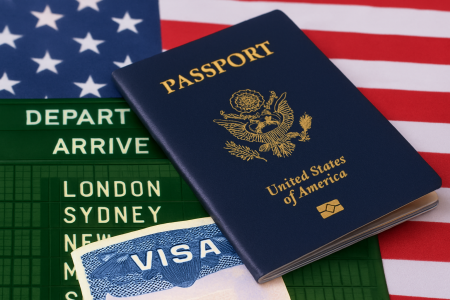
As Washington confronts Iran and Russia with sanctions, deterrence and proxy conflicts, the U.S. Diversity Visa (DV) program operates on a quieter front. Commonly referred to as the green card lottery, the DV program allows up to 55,000 individuals annually from countries with historically low immigration rates to win a new life in America. Though often overlooked, this program is more than an immigration channel; it is a structured policy instrument administered through the Department of State’s Bureau of Consular Affairs that quietly projects American influence into the heartlands of adversaries where diplomatic reach is constrained.
Right now, millions of people around the world are preparing their files for the Diversity Visa application window which will open in early October for only one month. In 2023, 10% of those selected for diversity visas came from Iran and Russia, countries that represented just 1% of the nations from which applicants originated. This disproportionate outcome is a testament to the enduring power of the American dream, even in countries whose governments are openly hostile to U.S. interests. For public administrators, it is also a reminder that bureaucratic mechanisms, when strategically designed, can serve national objectives alongside more visible instruments of power.
This yearning for liberty is set against a backdrop of confrontation. Washington’s June 2025 strikes on Iranian nuclear sites and Tehran’s retaliatory missiles at Al Udeid Air Base in Qatar have hardened the standoff. Reformists call for compromise, but Supreme Leader Khamenei insists Iran will “never bow” to the U.S. Meanwhile, ties with Russia show mixed signals since Trump’s return to the White House. The Alaska summit brought talk of cooperation, yet new missile strikes in Ukraine and threats of unlimited nuclear deployments keep relations tense. Both regimes cast the U.S. as the villain behind their citizens’ daily hardships, reinforcing anti-American narratives to sustain their grip on power at home.
Yet even as these governments demonize the United States, their own people continue to look toward it for salvation. For many Iranians and Russians, the Diversity Visa program represents not just a pathway out of authoritarianism, but an opportunity to live under a system where liberty and opportunity are protected by institutions rather than promised by rhetoric. Those who win, after clearing program eligibility checks and security screenings, are welcomed regardless of their country’s political stance. This administrative choice reflects a broader policy principle: America’s quarrel is with regimes, not with populations.
From a governance perspective, the DV program demonstrates how an ostensibly routine bureaucratic process can carry strategic weight. DV winners integrate into the U.S. as workers, students and future citizens. Many remain connected to their families and communities abroad, undermining authoritarian propaganda and serving as informal ambassadors of American values. This is soft power in its most institutionalized form. It advances strategic objectives through a program built on procedural fairness, random selection and transparent rules. It allows the U.S. to bypass hostile regimes and engage directly with individuals who could become champions of American ideals and voices of change in their home countries.
Of course, like all public programs, the DV has its trade-offs. Critics cite security concerns and question whether a lottery is the best mechanism for immigration selection. Yet Congress has repeatedly renewed the program, reflecting a judgment that its symbolic and practical benefits outweigh its costs. In a global environment where conflict and rivalry dominate headlines, the DV program illustrates how well-designed administrative tools can extend America’s influence far beyond military or economic measures.
Ultimately, the Diversity Visa program offers hope, undermines authoritarian narratives and builds bridges with individuals from historically adversarial nations. It sends a powerful, though understated, message: freedom and opportunity are not the privilege of a few, but the enduring promise of America to anyone, anywhere.
Author: Dr. George Farag, a former U.S. Diplomat and Consul, is an expert in immigration policy with extensive experience adjudicating visa applications.
 (No Ratings Yet)
 Loading...
Follow Us!