Widgetized Section
Go to Admin » Appearance » Widgets » and move Gabfire Widget: Social into that MastheadOverlay zone

The Forgotten Leader
The views expressed are those of the author and do not necessarily reflect the views of ASPA as an organization.
By Stephen M. King
February 20, 2026
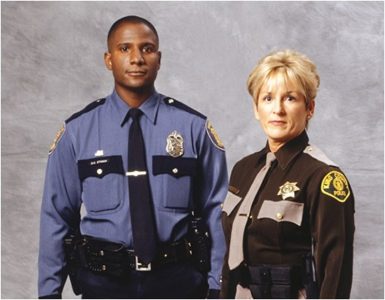
Practicing ethical leadership, defined as “guiding or directing people and organizations by moral principles,” is a critical element for all public service leaders, including law enforcement officers. In his 1980 book Street-Level Bureaucracy: The Dilemmas of the Individual in Public Service, Michael Lipsky argued that “front line public service workers,” such as police, teachers or social workers, are “policy-makers,” given their responsibility to exercise discretionary authority in the “shaping of public programs.” Likewise, front line public servants exercise ethical leadership. They draw from their personal and professional moral principles, influencing people, process and policy. They are the ethical bulwark of public service.
The International Association of Chiefs of Police Code of Ethics speaks to the heart of ethical leadership:
“As a sworn officer, my fundamental duty is to serve the community by safeguarding lives and property against threats that could take advantage of or harm members of my community or otherwise impact peace and order. I will uphhold the Constitution and honor the rights of all to life, liberty, equality, and justice. I will never employ unnecessary force. I will respect the privacy of people and communities that I serve, and I will fully obey the laws that I am sworn to enforce.”
Service. Protect the community. Uphold civil liberties and rights. Promote equality and justice. These goals are the heart of ethical public service and the responsibility of front line law enforcement officers.
For front line officers, these terms mean more than words. They mean a traffic stop at 2 a.m. of a vehicle with stolen plates. They mean securing the constitutional right of individuals to protest the very ones who guarantee that right. When they draw their weapon, they have seconds to decide whether to pull the trigger. It is one thing to recite a code of ethical conduct. It is another matter to live it. Front line officers must rise to this higher standard.
Public mistrust of government remains noticeable, including toward law enforcement. A recent Gallup poll shows that trust in police declined from 51 percent to 45 percent over the last several years. Since 2020, in Black communities the trust level is closer to 20 percent. This mistrust is based on a variety of factors, including perceptions of declining governmental trustworthiness. In part, public mistrust grows when institutions appear inconsistent in carrying out their stated commitments.
For front line officers, this is critical, because the public perceives “that police agencies tolerate ongoing inconsistencies between their stated principles and the conduct of their personnel.” Whether or not this perception is accurate, according to retired Sheriff of Pierce County, WA, Paul Pastor, the responsibility falls on law enforcement agencies to look inward and make necessary corrections.
At the heart of ethical leadership is the connection between a leader’s core values and how those values are exercised. If a front line officer is leading ethically, then the core values they hold to, such as honesty, integrity and empathy, will manifest in behavior and decisions. But a skeptic might ask, “Okay, but how do we know this?” Operating by the National Decision Model is one possibility.
The National Decision Model was established in England in the late 2010s. According to British criminologist Peter Neyroud, it provides an empirical guide to aid front line officers in making ethically sound decisions in “fast-time operational use of force scenarios.” Later, it expanded to staff officers engaged in “operational and strategic decision-making in general…”
Using a code of ethics as its central core, the model links ethical guidelines with the traditional policy analytic process, including information gathering, assessing threats, considering choices, examining options and making a decision. In effect, it offers an evidence-based approach for both staff and front line officers to assess and address problems. Staff officers may be significant in sustaining an ethical leadership approach, but Lipsky’s front line officer is often the one confronted with life-altering ethical choices in real time.
Law enforcement officers operate within complex and often polarized environments. Despite these pressures, they must remain steadfast and maintain the moral integrity and ethical stamina necessary to serve their communities effectively. Ethical leadership on the front line is not abstract. It is practiced daily, often in moments that require immediate judgment, discretion and courage.
Author: Stephen M. King is Professor of Government at Regent University, Virginia Beach, VA. He teaches undergraduate courses in American politics, state and local government, and public policy, and has taught graduate courses in public policy analysis and ethical leadership and administration. He publishes on the topics of ethics and public administration and leadership. He served as President of the Hampton Roads Chapter of ASPA (AY24-25), sat on the Advisory Council for SEIGov, ASPA. (AY21-24) and currently serves on the editorial board of the Viginia Journal of Public Administration (2025-). His latest book is Ethical Public Leadership: Foundation, Organization, and Discovery (New York: Routledge, 2023). Contact him at [email protected].
 (1 votes, average: 5.00 out of 5)
 Loading...
Follow Us!