Widgetized Section
Go to Admin » Appearance » Widgets » and move Gabfire Widget: Social into that MastheadOverlay zone
The “Foundational Skills” Gap: A Case for Increasing Focus and Resources in Emergency Management and Homeland Security Training and Education
The views expressed are those of the author and do not necessarily reflect the views of ASPA as an organization.
By Adam C. Sutkus
January 30, 2026
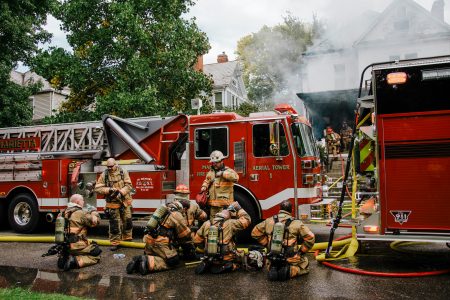
The growing frequency, scale, and overlap of emergencies have heightened awareness among emergency management (EM) and Homeland Security (HS) professionals of the need to prepare for increasingly complex disaster environments. Since the Sept. 11 attacks and, more recently, the pandemic, public safety organizations have struggled to establish effective coordination methods in a rapidly evolving field. Practitioners face frequent policy and organizational changes, shifting federal funding streams, adherence to a national EM framework and the challenge of engaging the public and interdisciplinary partners in an orderly way. Artificial intelligence and social media add yet another layer of complexity.
Many professionals are now being pushed beyond their traditional roles and expected to apply unfamiliar skills. These include collaborative problem-solving, stakeholder engagement, negotiation, conflict resolution and strategic thinking. For most, these approaches are outside formal training. Equally critical are the mechanics of effective meetings, organizational dynamics, interpersonal communication and project management. While public safety personnel receive extensive tactical and technical training, these foundational skills are often overlooked.
I have observed this gap both as a practitioner and in the classroom. There are three broad categories of foundational skills that require formal attention, resources and structured development:
1. Internal Organizational Skills
Tensions can run high in any stressful situation—whether during an emergency activation or when engaging with stakeholder groups to develop planning documents or design exercises. Practitioners need to know how to pursue an interest-based—rather than positional—framework for dialogue. Overlaying these skills is the critical need to communicate effectively, both in writing and verbally. Key competencies include:
- Facilitation and group dynamics
- Consensus building and team building
- Dispute resolution and conflict management
- Networking and interpersonal communication
- Strategic planning and organizational change
- Writing proficiency
- Leadership, mentoring and problem-solving
- Interest-based negotiation
2. External-Facing Skills
Instant communication through social media—and increasingly, artificial intelligence—is ubiquitous. Staying ahead of misinformation and disinformation has become a strategic requirement. Understanding how to speak effectively at public events and to gauge the interests of stakeholder groups is essential. Engaging with diverse sectors on complex planning projects often requires months of skilled facilitation. Core competencies include:
- Public speaking
- Civic engagement and communicating with the public
- Stakeholder assessment, mapping, coordination and recruitment
- Social media awareness
- Public messaging and media relations
- Cultural competence, including engagement with underrepresented populations and special sectors (e.g., access and functional needs
3. Project and Program Management Skills
Developing and executing plans requires structure, clarity, and discipline. A plan development effort should involve a program charter (timeline, resources, membership, decision-making criteria, ground rules, budget, etc.) and realistic time expectations. Process design should involve key stakeholder groups, core planning team partners, organizational structure and deliberation rules. Basic meeting management is also essential, including creating agendas with clear topics and expectations, setting ground rules and capturing outcomes in notes to ensure follow-up actions and institutional memory. Key skills include:
- Developing charters and processes for longer-term initiatives
- Budgeting and personnel management
- Designing meetings and workshops
- Managing and facilitating meetings
- Collaboration for multi-party effectiveness on complex projects
At the university level, some programs are emphasizing these skills more deliberately. At the State University of New York at Albany, where I am an adjunct lecturer, a course on governance, stakeholders, and collaboration is offered through the College of Emergency Preparedness, Homeland Security, and Cybersecurity. Practitioner-academics are also contributing to this area. Two I regularly engage with are Brad Marmon of Upstate Medical University and Andrew Boyarsky, president of Pinnacle Performance Management. Both are pioneers in advancing collaborative skill development.
FEMA’s free Independent Study courses provide a practical starting point, and many other avenues exist. Once considered optional, these foundational skills are now essential for navigating the complexity of EM and HS practice and for sustaining effective governance in uncertain environments.
Author: Adam C. Sutkus is an adjunct lecturer in the College of Emergency Preparedness, Homeland Security, and Cybersecurity at the State University of New York at Albany and a trainer with FEMA’s National Disaster Emergency Management University. He retired from the California Governor’s Office of Emergency Services in 2020 and previously served as executive director of the Center for Collaborative Policy at California State University, Sacramento. He can be reached at [email protected].
 (2 votes, average: 5.00 out of 5)
 Loading...
Follow Us!


Dr. Frannie Edwards
January 30, 2026 at 8:32 pm
Emergency management is a profession requiring multiple skills and competencies. Critical thinking and project management are probably the two most important to support rapid and effective decision making during crisis events.