Widgetized Section
Go to Admin » Appearance » Widgets » and move Gabfire Widget: Social into that MastheadOverlay zone
The Hidden Costs of Revenue Caps
The views expressed are those of the author and do not necessarily reflect the views of ASPA as an organization.
By Michael R. Ford
March 13, 2026
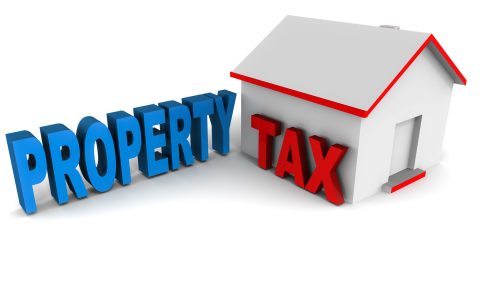
Here in Wisconsin, like in many other states, school districts and local governments face state-imposed tax levy and revenue caps that limit local government spending. The caps, imposed in the 1990s, have performed well in lowering the overall tax burden for state residents. Wisconsin residents had the third-highest tax burden in the United States in 2000 and the 34th highest in 2023. However, the caps continue to spur debate over local control and the fiscal sustainability of school districts and municipal governments.
I have experienced the impact of revenue caps as both a city council and school board member. In both roles, I found a disconnect between how the public assumes the tax levy is set and the reality of how it is determined. When states have tight revenue caps or levy limits, the tax levy is often a backed-into number that is a function of state funding and state policy rather than local discretion.
In Wisconsin, school districts and municipalities have the option of going directly to voters for permission to exceed revenue or levy caps for either capital or operational expenses. The additional revenue comes from local property taxpayers. The logic is that members of the public can be empowered to raise their own property taxes if they want to increase funding for their municipality or school district.
The logic of direct democracy seems simple: let the people decide what they want to do. But it does come with a cost. MPA students who took public budgeting may have read Tummala and Wessel’s classic, “Budgeting by the Ballot,” which analyzes Montana’s experience with financially related ballot initiatives. The authors found voters often lacked full information about the impacts of what they were voting for or against. They also found the timing of ballot initiatives was often out of step with budgetary timelines, introducing chaos and uncertainty into government operations. Finally, the ballot initiative process was prone to being used as a political tool.
In Wisconsin, an increasing number of school districts and municipalities are going to referendum to fund operational and public safety costs in particular. While capital referenda have long been common, the increase in direct appeals for funding basic operations is notable. Though each referendum is unique, the issues highlighted by Tummala and Wessel are evident in referendum debates across Wisconsin communities.
First is the issue of information. The specifics of municipal and education finance are complex, and those complexities make referendum debates confusing and prone to misinformation, both intentional and unintentional. Realities such as fixed costs, restrictions on the use of funds, fund accounting and the impact of inflation make it difficult to establish basic facts that allow voters to evaluate the pros and cons of a referendum question. Too often, the alternative is elections decided by vibes and longstanding perceptions that may or may not be grounded in fact.
Second is the issue of timing. Municipalities and school districts are complex organizations that invest in long-term costs such as physical and human capital that require steady, predictable funding sources. The use of referenda to fund basic operations creates a dynamic where the long-term sustainability of an organization is dependent on the political whims of the day. This situation places executives and board members in an impossible position. Do they risk making long-term decisions likely in the best interest of the organization and those it serves, or do they minimize risk by pursuing short-term strategies that allow for pivoting when referenda pass or fail? Either way, extreme political volatility in funding decisions is inconsistent with building high-functioning, sustainable public organizations.
This leads to the third and most important issue: referendum politics. The politics around referenda are often divisive, ugly and lasting. Partisan political parties often become involved. Limited questions about funding become platforms for broad political fights over past decisions made by a municipality or school district. When the election is over, there is often a hangover period where the community and governing board remain divided. Though the divisive impact of referendum politics is not new, it becomes more destructive when public organizations repeatedly go directly to voters to fund basic operations. In a time of extreme political polarization, referenda can further deepen existing divisions.
In Wisconsin and elsewhere, the current approach to levy limits and revenue caps will be difficult to sustain. The political and performance costs create a dysfunction loop that erodes confidence in local government. Only a more sustainable approach to controlling the tax burden while maintaining local governing capacity can end that dysfunction loop.
Author: Michael R. Ford is a professor of public administration at the University of Wisconsin Oshkosh, where he teaches graduate courses in budgeting and research methods. He frequently publishes on the topics of public and nonprofit board governance. He also serves as the director of the Whitburn Center for Governance and Policy Research and as an elected member of the Oshkosh Area School District Board.

 (2 votes, average: 4.50 out of 5)
 Loading...
Follow Us!