Widgetized Section
Go to Admin » Appearance » Widgets » and move Gabfire Widget: Social into that MastheadOverlay zone

The Housing Conundrum: A Public Administration Opportunity
The views expressed are those of the author and do not necessarily reflect the views of ASPA as an organization.
By Renée Cardarelle
May 1, 2026
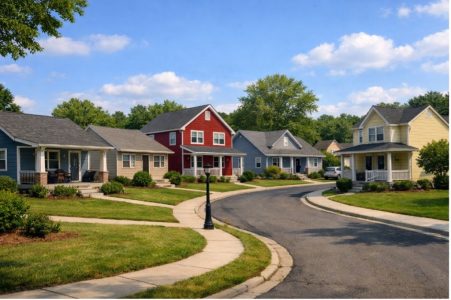
For many public administrators, housing concerns may seem far removed from their day-to-day operations. If they consider them at all, it may only be in relation to the homeless or low-income populations such as Section 8 housing or shelters. However, the issue is much broader and impacts every part of U.S. governance, from human service management to transportation infrastructure to economic vitality. Indeed, as a 2026 United States Chamber of Commerce report highlights, the lack of quality and affordable housing is a pervasive issue that costs states billions of dollars annually in economic output, personal income and jobs, with losses in states such as California, Texas and Florida estimated to exceed 20 billion dollars. This makes the lack of affordable housing a complex wicked problem that defies easy classification.
Wicked problems are not about what is morally right or wrong. They are enduring, complex social problems that are difficult, if not impossible, to solve and that have multiple causes and potential solutions. In addition, wicked problems often shift over time, with previous solutions becoming part of the problem. The complexity of housing shortages in the United States reflects this dynamic, driven by interconnected factors including market forces that incentivize higher-end development, rising material and construction costs, increased interest rates, regulatory processes, consumer expectations and income levels that have not kept pace with housing prices.
Another characteristic of wicked problems is that they are often defined by the solutions being proposed. For instance, the current shortage of middle-income housing can be framed as a market failure. Affordable, low-cost homes generate lower profit margins, and developers are drawn to more lucrative projects. Inflation and high construction costs further reduce supply, while fluctuating interest rates add additional pressure. When framed as a market failure, solutions tend to focus on correcting market signals, including increasing wages, lowering interest rates or incentivizing the production of middle- and low-income housing.
However, housing shortages can also be framed as a failure of government regulation. Outdated zoning laws that favor single-family units over other housing models, high utility costs, tax structures and other regulatory factors can increase housing prices and limit access for middle-income families. Solutions framed from this perspective differ significantly from market-based approaches.
Consumer expectations represent another framing of the issue. Many households have become accustomed to large single-family homes with features such as private pools, multi-car garages and large home offices. Solutions that emerge from this framing may include the development of shared or common spaces that reduce per-unit housing costs.
All of these perspectives increase the complexity of the problem and make it difficult to determine a single course of action. This is where public administrators can play an important role. They can recognize the multiple intersections involved in housing, understand the specific dynamics within their communities and identify which framing is being used to define the problem. Even if they have little direct responsibility for housing policy, administrators can still recognize how housing pressures affect their areas of responsibility and help facilitate informed dialogue.
Where public administrators do have local authority, they can also consider actions that address housing challenges more directly. This may include evaluating local regulations, identifying barriers to middle-income housing development, assessing housing gaps within the community, examining local drivers of homelessness or reviewing infrastructure and utility costs associated with new housing developments.
Shelter is one of the most basic human needs. Planning for adequate housing is a responsibility shared across all levels of government, and public administrators can help by focusing on how housing intersects with their areas of expertise. Most importantly, they can move discussions beyond narrow or overly simplified solutions and instead help communities engage with the complexity of the issue. They can also encourage creative problem solving that acknowledges the evolving nature of housing challenges.
In this way public administrators have the opportunity to bring forward solutions which help ensure housing needs are met.
Author: Renée Cardarelle has a PhD in Management and Public Service from Hamline University with a focus on public participation in the governing process. In addition to her work in academia, Renée has also worked in the nonprofit sector and in grassroots organizing for more than twenty-five years.
 (No Ratings Yet)
 Loading...
Follow Us!