Widgetized Section
Go to Admin » Appearance » Widgets » and move Gabfire Widget: Social into that MastheadOverlay zone
The Pause That Refreshes: Why Stopping To Listen and Learn Can Make You a Better Leader and Person
The views expressed are those of the author and do not necessarily reflect the views of ASPA as an organization.
By Andrew Kleine
February 20, 2026
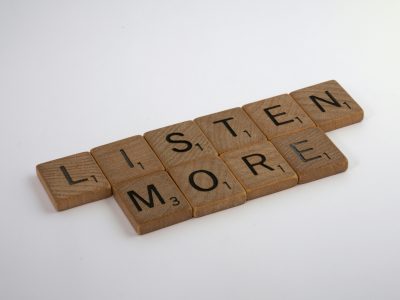
Recently, an event and a book have given me pause or, more precisely, gotten me thinking about the power of pausing to make good decisions and how we as individuals and organizations can make strategic pauses part of our routines.
The event was a White House Office of Management and Budget alumni luncheon. To give you a clue about how long ago I worked at OMB, I was there the last time the federal government had a balanced budget. Yet this was my first-ever alumni event. One of the speakers was John Koskinen, whom I got to know when he was the Y2K czar and I was a program examiner handling the U.S. Coast Guard account. He would later run the IRS, which may be the singularly most thankless job in America.
When asked if he made any decisions as an executive that he regrets, Mr. Koskinen said no, and the reason is that he took time to discuss every important decision with his team. “A group makes better decisions than any individual acting on their own,” he said. As a leader, the key to a productive team discussion is to never let people know your thoughts, and instead just listen. You may already have 90% of the information you need; it’s the other 10% that often saves you from making a mistake.
The book is Fragile Systems: An Ecological Approach to AI in Government, by Micah Gaudet. Gaudet writes that efforts to introduce new technology fail “not from lack of ambition, but from the absence of intentional pause.” He relates a fictional but familiar story of artificial intelligence software being deployed with much fanfare, but also with bugs and quirks that eat up promised time savings and cause morale-killing frustration. This failure could have been averted by asking and answering some basic questions up front about what problem needed to be solved and how best to solve it. In Gaudet’s words, “Without a framework for discernment, momentum fills the space.”
For local government finance officers peering down big budget holes, the urgency of fixing finances is accompanied by pressure to implement cost-saving measures, including AI technology. Add the cultural and political expectations for decisive action and all the conditions are in place for bad decisions. How can we instead create Gaudet’s framework for discernment?
We can start by behaving more like AI. Huh? Believe it or not, inside large language models is a series of “learnable pause tokens,” which allow the model to process additional computations before committing to an answer. These tokens have been empirically evaluated on various tasks, showing gains in performance, particularly in reasoning and question answering.
If taking leadership advice from a robot leaves you cold, perhaps a yoga master is more convincing. In his essay, “A Pause is a Moment of Integration,” available on heartfulness.org, Daaji, also known as Kamlesh Patel, writes, “Wisdom, after all, is not just knowledge — it is knowledge transformed by patience, humility, and awareness. A pause is a critical element of that transformation.” One way to incorporate pausing to discern, and not delay, is something called a premortem, a concept introduced by Gary Klein in the Harvard Business Review. It is a risk management strategy in which a team imagines a project has already failed and works backward to identify all the potential reasons why. By assuming failure, a premortem breaks the psychological dynamics that often lead to bad decisions. It provides a safe space to voice doubts, challenges overconfidence and addresses vulnerabilities before they become problems. As a budget director, after watching departments treat their budgets as suggestions instead of dictates, I started my own version of a premortem called the Budget Execution Plan. Developed at the beginning of each fiscal year, the BEP anticipated issues that could throw a department’s spending or revenue off track and memorialized proactive and reactive steps to mitigate the risks. These steps included hiring schedules, deferral of discretionary purchases and, in some cases, monthly or quarterly obligation ceilings.
Budget pressure is exactly when a pause is most necessary. It is fair to wonder if a premortem would have helped Flint’s emergency manager better understand the risks of switching the city’s water supply source, a cost-saving action that had terrible and avoidable public health consequences. In addition to premortems, leaders can require decision timeouts to avoid acting hastily and build pause checkpoints into project plans. These kinds of structured pauses can be triggered by risk criteria and also time-bound to mitigate unnecessary delays.
Pausing with intention requires changes in mindset as well as practices. A former big-city chief administrative officer told me, “In major city management, you spend most of your day putting out fires and looking for the smoke of future fires; you have to retrain your thought process to pause.” He described how taking time to listen to residents vastly improved his city’s response to hurricanes. His insight is, essentially, that slowing down hurricane preparation speeds up evacuation and recovery, that speed comes from clarity. Similarly, he credited a police consent decree with forcing the city to step back, absorb uncomfortable data, have community discussions and resist the urge for quick fixes.
Just as teams and organizations should build pauses into their routines, so should individuals. When faced with a tough decision or problem, it’s OK to say, “Let me sleep on it.” Or to take a walk to think it over. Insight needs room to surface. Pausing also means getting the rest you need, taking vacations and carving out regular time for thinking, reading and reflecting. I’ve adhered to these habits in my life and am convinced they have made me happier, kinder and more creative.
The “plan-do-check-adjust” cycle is a well-known method for continuous improvement and problem-solving. It’s worth noticing that “do,” taking action, is only one of four steps. The other three are all forms of pausing, to anticipate, analyze and adapt. If your own cycle is moving too fast, try pausing in whatever way works best. It could make you a better leader and a better person.
The views reflected in this article are the views of the author and do not necessarily reflect the views of Ernst & Young LLP or other members of the global EY organization.
Author: Andrew Kleine is managing director for the Government & Public Sector at EY-Parthenon, Ernst & Young LLP. He is the author of City on the Line: How Baltimore Transformed Its Budget to Beat the Great Recession and Deliver Outcomes (Rowman & Littlefield, 2018). He has served as a county administrator and city budget director.
 (No Ratings Yet)
 Loading...
Follow Us!