Widgetized Section
Go to Admin » Appearance » Widgets » and move Gabfire Widget: Social into that MastheadOverlay zone

Virginia as a Bellwether: The 2025 Wilder Symposium
The views expressed are those of the author and do not necessarily reflect the views of ASPA as an organization.
By The VCU Wilder School Office of Research and Outreach
October 6, 2025
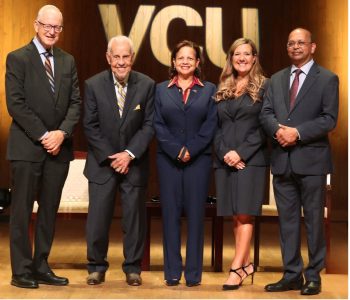
As Virginians prepare to elect the state’s first female governor, panelists at the 2025 Wilder Symposium explored a restless electorate, a deepening erosion of trust and why the commonwealth so often reflects the nation’s democratic struggles.
Hosted by the L. Douglas Wilder School of Government and Public Affairs at Virginia Commonwealth University, the symposium unfolded just weeks before voters choose between Democrat Abigail Spanberger and Republican Winsome Sears. Nearly half of Virginians now identify as independents, cost of living ranks as the top issue and Virginia’s rare off-cycle election offers a glimpse into the national mood ahead of the 2026 midterms.
Gov. L. Douglas Wilder, the nation’s first elected Black governor, convener of the symposium and a distinguished professor at the Wilder School, framed the stakes. “America is still in search of itself—searching to find out that promise, the fulfillment of that promise, the ability to say we don’t have it all right, but let’s correct what we can that is wrong,” he said.
Wilder pressed the case for accountability over rhetoric. “Ask them, what have you done? What have you tried to do? What have you accomplished? I didn’t ask you what you believed in. What have you done?” His impatience, directed at political leaders, was clear: voters deserve receipts, not slogans.
If Wilder delivered moral urgency, Robyn McDougle, Ph.D., associate dean for research and outreach at the Wilder School and director of the Commonwealth Poll, offered data. “Independents are a growing body… Almost half of the population is independent and undecided.” She noted that cost of living, women’s reproductive rights and immigration rank as top issues, yet trust is a deeper fracture. “Eighty-nine percent of respondents said they do not think our government spends their money responsibly. That’s an erosion of trust in our structure and our government systems.”
Niraj Verma, Ph.D., former Wilder School dean, cautioned against overreliance on polling or campaign finance as destiny. “The real test is going to be how many people can each candidate touch? How many doors do you knock? How hard do you work?” He also pointed to the surge in campaign money: “There has been a 28-fold increase in Super PAC funding between 2010 and 2024…dark money now stands at $1 billion.” His answer, like Wilder’s, returned to the human act of campaigning—face-to-face encounters and local trust.
Susan Gooden, Ph.D., dean of the Wilder School, spotlighted paradoxes. Virginia will elect its first female governor, yet the milestone has drawn little attention. “That’s a historic first… But the paradox is that for all the history, there is very little discussion about it.” She pointed to the diversity of the ballot as another overlooked dimension: “For all the debate about DEI, we have very little conversation about the diversity that has brought these candidates to the fore.”
Her analysis also extended to the national stage. “Virginians are talking about Trump… but Trump is not talking about Virginia. There’s been no campaign rally here, no endorsement of Winsome Sears. That’s an interesting paradox.”
Bringing the threads together, Bob Holsworth, Ph.D., founding director of the Wilder School and a leading voice on Virginia politics, reminded the audience that state elections here rarely stay contained. “If Abigail Spanberger loses, it’s a catastrophe for the Democrats nationally… If she wins and the Democrats pick up seats in the House of Delegates, that will send shudders through Republicans in Congress who have to run in purple districts in 2026.”
He cast Virginia as the first draft of the midterms. “The first election of 2026 is happening in Virginia,” he said, underscoring how the commonwealth once again functions as a national test case.
The conversation did not stop with the panelists. Audience members pressed on feminism, executive power, campaign finance and Trump’s shadow. Their questions sharpened the evening’s themes: the absence of identity politics even in a diverse race, the risks of short-term thinking, the corrosive reach of money and the unpredictability of Trump’s role.
By the end, the symposium’s contours were clear. Wilder’s demand for accountability. McDougle’s portrait of independents and eroding trust. Verma’s reminder that politics remains a ground game. Gooden’s paradoxes of history and silence. Holsworth’s insistence that Virginia is never just about Virginia.
And Wilder closed the evening with unmistakable clarity: “Don’t give up. Fight the fight. God bless.”
It was a fitting conclusion to a conversation that acknowledged fractures in public trust but also the persistence of civic life. In that tension, Virginia continues to mirror the nation—flawed, searching, but stubbornly vital in its democratic work.
Author: Ranked among the nation’s top schools of public affairs, the Wilder School at VCU advances excellence in governance and evidence-based public policy. Its programs and nationally recognized Centers and Institutes provide applied research and services that strengthen communities across Virginia and beyond.
 (No Ratings Yet)
 Loading...
Follow Us!