Widgetized Section
Go to Admin » Appearance » Widgets » and move Gabfire Widget: Social into that MastheadOverlay zone
What Public Administrators Should Watch for in the New Grants Environment
The views expressed are those of the author and do not necessarily reflect the views of ASPA as an organization.
By John M. Kamensky
July 17, 2026
One of the clearest shifts is the federal government’s renewed emphasis on payment integrity and fraud prevention before money goes out the door. While administrations of both parties have tried to improve improper payment controls, what is different now is the intensity of that effort, the use of broader cross-agency data sharing and the degree to which these controls are being paired with enforcement actions and public claims about waste, fraud and abuse. In practice, that means grant recipients should expect closer scrutiny of eligibility, internal controls, payment requests and supporting documentation.
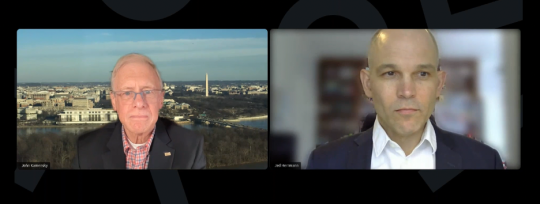
These and other grant-related topics were the focus of a recent webinar sponsored by ASPA’s Center for Accountability and Performance, where Jed Herrmann of Guidehouse was the featured speaker and I served as moderator. Our conversation focused on what public administrators should watch for now and how governments can be more proactive rather than reactive as federal management priorities shift. The discussion drew on Herrmann’s experience at Guidehouse and in prior roles at the U.S. Department of the Treasury and the Office of Management and Budget.
The conversation also explored a deeper issue: instability in grant administration. We discussed how DOGE-related reviews, funding pauses, delayed disbursements, canceled awards and agency-by-agency reassessments have contributed to a weaker sense that federal grants are dependable. For states and localities, this creates a budgeting problem as much as a compliance problem. Even when funding remains legally available, state and local governments may have to slow spending, build contingencies or reconsider program commitments because the timing and conditions of federal support no longer feel settled.
Technology was also part of the conversation. We explored how the Trump administration is using artificial intelligence and integrated data systems to strengthen oversight, identify risk and improve operational control. Some of these efforts could produce real administrative benefits, but the conversation also highlighted the need for public administrators to pay close attention to legal limits, privacy rules and the risk that tools built for efficiency can become tools for exclusion or politicized decision-making if they are not governed carefully.
We also discussed the increased accountability embedded in a recently proposed federal grants rule published in the Federal Register, Regulation for Federal Financial Assistance, and why the shift from guidance to rule matters in its own right. Herrmann noted that one reason for moving key grants policies into regulation is to satisfy the Administrative Procedure Act, which has become a recurring issue in litigation over grant freezes and other executive actions affecting federal funds. Herrmann also emphasized that the draft grant regulations would cement directives laid out in earlier executive orders, especially Executive Order 14332, Improving Oversight of Federal Grantmaking, as well as the administration’s broader fraud, waste and abuse agenda.
The grants conversation centered on how the draft regulation would do more than reorganize existing guidance. It would formalize a more directive model of grantmaking by giving senior appointees a larger role in discretionary award decisions, expanding pre-award risk review, tightening documentation tied to payments and internal controls, increasing reporting and oversight expectations for subawards and broadening agency authority to suspend or terminate awards. For state and local governments, this will create both a legal and operational shift: placing recent grant policy changes on firmer procedural footing while making federal grants more controlled, more heavily screened and more directly tied to administration priorities.
The conversation pointed to a practical lesson for public administrators. Herrmann noted that governments need better centralized visibility into their federal grant portfolios. They need to know which programs are exposed, where compliance burdens are rising and how federal shifts could affect service delivery, budgets and subrecipients. In this environment, grants management can no longer be treated as a back-office function scattered across departments. It is part of core operating infrastructure. He pointed to several states that have already pioneered centralized oversight of federal grant management, including Colorado, Massachusetts and Wyoming.
That was the common thread through our discussion: the issue is not just that federal priorities are changing, it is that the systems, rules and relationships that once made intergovernmental funding more stable are weakening at the same time. For practitioners, this highlights the need for better coordination, stronger internal capacity and a clearer view of federal grants as a strategic management issue rather than simply a compliance task.
You can listen to a recording of the full one-hour webinar episode [here.]
Author: John M. Kamensky is an emeritus senior fellow with the IBM Center for The Business of Government and a senior fellow with ASPA’s Center for Accountability and Performance.
 (No Ratings Yet)
 Loading...
Follow Us!