Widgetized Section
Go to Admin » Appearance » Widgets » and move Gabfire Widget: Social into that MastheadOverlay zone

Who Owns the Water? Groundwater Governance Challenges in East Texas
The views expressed are those of the author and do not necessarily reflect the views of ASPA as an organization.
By Savanna Batson
January 23, 2026
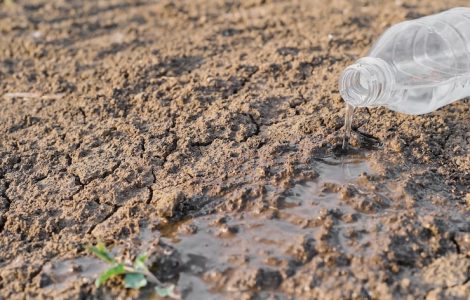
ast Texas boasts numerous surface water reservoirs and lakes and underground, the Gulf Coast Aquifer, Carrizo Wilcox Aquifer and the Trinity Aquifer have historically provided ample groundwater. However, as the effects of intensifying climate change make themselves known, East Texas’s water resources may not be as secure as they once were.
In May 2025, residents of Anderson, Cherokee and Henderson Counties became aware of plans to drill exploratory wells in the area when the Neches & Trinity Valleys Groundwater Conservation District (NTV GCD) ran announcements of permit applications in local newspapers. The applications were filed by Conservation Equity Management (CEM), a private equity firm seeking to drill 21 wells in Anderson County, Texas at a total rate of more than 10 billion gallons per year and 22 wells in Henderson County, Texas at a total rate of more than 5 billion gallons per year in Henderson County. The water would then be piped and sold to other, less water abundant regions of the state.
The practice of moving surface water or groundwater from one sub drainage area or subregion to another through man made or artificial pathways is known as interbasin transfers. These transfers can significantly affect water supplies, hydrology and the environment in both the giving and receiving basins (Siddik et al, 2023). Interbasin transfers are not new; Roman architects famously used aqueducts to supply cities with fresh water.
Still, the volumes of water proposed by CEM are staggering. They amount to roughly one third of the City of Austin’s water usage (Bostwick, 2025). In turn, the Houston Chronicle reports that, “For locals, it has become an existential threat. Groundwater wasn’t on anyone’s radar in Anderson County, [County Judge] McKinney said – they’d always had plenty. Suddenly a rich out-of-towner was intent on taking nearly all of it, and nothing seemed to be standing in his way.”
The notion that nothing stood in CEM’s way is not entirely accurate. CEM submitted the required drilling permit applications to NTV GCD, which has since failed to either approve or reject them. Lawyers for CEM and its properties are now suing NTV GCD, accusing the board of “rogue, unlawful” conduct and “unconstitutional” delays (qtd. in Curriden, 2025). While popular responses suggest a straightforward rejection of the permits, the legal landscape is more complicated.
Like the state’s 97 other groundwater conservation districts, NTV GCD draws its authority from the Texas Water Code. Its duties are complicated by the fact that landowners, not the state, own groundwater. Adopted in 1904, the rule of capture grants landowners the right to capture unlimited groundwater, with limited exceptions allowing neighboring landowners to seek legal recourse. For this reason, the rule of capture is sometimes called the rule of the biggest pump.
Further complicating regulatory authority is the fact that GCD boundaries follow county lines rather than hydrogeological boundaries. As noted in The Texas Tribune, local groundwater management is viewed as integral to the state’s economy: “In South Texas’ vast Carrizo Wilcox Aquifer, which is managed by 21 different GCDs, for instance, ‘part of that aquifer has very urbanized areas over it; part of it is mostly wildlife and hill country’…[As such, a] rural county would rightly regulate an aquifer differently than an urban county, because the pumping needs are different,’ [Greg Ellis] said” (Satija, 2013). Texas’s approach creates clear challenges for equitable and sustainable common pool resource management.
Elinor Ostrom defines common pool resources as systems that generate finite quantities of resource units such that use by one person subtracts from what is available to others (2002). Aquifers fit this definition. They can be destroyed through overextraction or pollution. When extraction exceeds replenishment, the gravel and sand that hold water compact and lose storage capacity, and saltwater intrusion can compromise freshwater basins (Ostrom, 1990, p. 106).
The tragedy of the commons occurs when valuable and accessible resources are not governed effectively (Ostrom, 2002). Effective governance provides mechanisms to alter behavior that leads to excessive externalities and eventual depletion. While the tragedy of the commons highlights the economic incentives driving overuse, it also underscores that those most capable of depleting a resource are often best positioned to prevent its collapse.
Returning to the question of interbasin transfers from East Texas, whether CEM’s proposal proceeds or not, it is unlikely to be the last of its kind. As long as economic incentives exist, pressure to move water will remain. In states facing increasing water scarcity, local groundwater management entities should not only use existing enforcement mechanisms but also reconsider governance structures to prevent a tragedy of the commons from afflicting their groundwater resources.
 (No Ratings Yet)
 Loading...
Follow Us!