Widgetized Section
Go to Admin » Appearance » Widgets » and move Gabfire Widget: Social into that MastheadOverlay zone

Understanding the Current Crisis in Public Administration: Part 4 – Aging Infrastructure
The views expressed are those of the author and do not necessarily reflect the views of ASPA as an organization.
By Erik Devereux
August 22, 2025
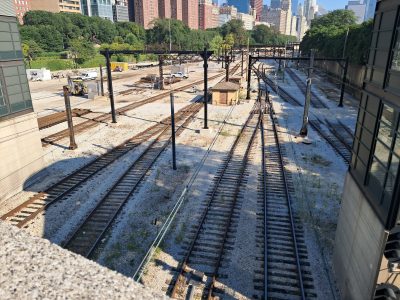
This is the fourth column in a series on the current crisis in American public administration that is rewriting much of what we think about American government (first column, second column, third column). The series invokes plate tectonics as a metaphor for thinking about what has transpired with the federal government since January 20. What matters most are the subterranean forces slowly building up immense pressures which ultimately are expressed in seemingly rapid shifts in the public landscape. One of those forces may be the way aging infrastructure accumulates to hobble and eventually undermine societal cohesion and consent to be governed.
Amidst all other “wicked problems” the United States is experiencing at the moment is the obvious poor quality of infrastructure. Among the most discussed aspects are thousands of bridges rated on the verge of failure. A bridge collapse in Pittsburgh several years ago became a poster child for this issue. Added up, the U.S. has an infrastructure investment deficit estimated in the trillions of dollars. This deficit has been accumulating in a direct causal relationship with the federal government deficit—both are symptoms of a political system that is unable to raise the revenues necessary to prevent decay and decline. As I previously discussed in this series, one of the forces responsible for the deadlock in the political system is the apparently inevitable expression of internal factions during extended periods of social stability.
Amidst the deadlock, Americans have become increasingly aware that the country feels old and broken. In June 2022, I spent two weeks in central Switzerland and was stunned by the clean, modern, efficient trains, beautiful highways and well-ordered cities. Having taken Amtrak in the bustling U.S. Northeast Corridor frequently, I felt upon return like my country was an end-stage cardiac patient riven with varicose veins.
The recent history of efforts to reverse the decline of infrastructure in major U.S. urban areas often have gone poorly. One example is the ongoing construction of the Purple Line, a light rail system running East-West from New Carrolton, Maryland to Bethesda, Maryland. This seemingly logical infrastructure development has devolved into a fiscal embarrassment, running well over 100% beyond the originally budgeted price of $4 billion. Just like that bridge in Pittsburgh, the Purple Line has become a poster child, this time for a series of efforts to build new infrastructure in the U.S which have been derailed by incredible cost overruns, endless lawsuits related to environmental impact and inevitable NIMBYism.
Why? The thumbnail sketch is that the U.S. is filled with contesting interests fighting in the public sphere rather than cooperating. The Chicago region where I reside is looking at a “fiscal cliff” for mass transit systems (CTA rail and buses, Metra regional rail) which threatens to vastly curtail services millions of riders need to get to work and shopping. In the last legislative session, basically no proposal to prevent this unprecedented disaster made any progress. Instead, state legislators from outside the region joined forces with suburban representatives (whose constituents rely on cars for transportation on some of the country’s most choked highways) to block any short term or longer terms solutions. Illinois is not one unified state trying to solve its problems anymore just as the U.S. no longer seems like one country. This process of division may be another inevitable aspect of an aging empire.
Much of the anger and despair that has fueled the current crisis in public administration is a result of widespread recognition that, as the U.S. is falling apart in terms of infrastructure, our governance system are not up to the challenge. President Trump in his first term spoke often of the need to “fix the infrastructure” but took no concrete actions. In Trump’s second term, infrastructure seems to be completely off the agenda. The anger and despair were toxic to the chances of a wide range of alternative political views but did not translate into a productive presidential administration that was interested in repairing bridges, funding mass transit, improving roadways, or moving the U.S. closer to countries like South Korea in terms of the quality of Internet services.
What this feels like is a barroom brawl on the deck of the Titanic. Everyone is slugging away at others while the entire ship is going down. In this moment, the most natural and worst choice is to attack and undermine the very people and institutions you most need to tackle these problems. As I have written elsewhere in the PA Times, the efforts to defund science, destroy entire government agencies and roll back federal protections for civil rights are all part and parcel of a political movement that seeks political benefits for its adherents.
A society cannot endure in this mode for long. As I will discuss in the next column of the series, there are devastating consequences of the current failure of governance that will play out for many generations through irreversible demographic trends. Governments can do many things but they cannot make people procreate. When the birthrate collapses, the country itself ends up in hospice.
Author: Erik Devereux is Teaching Associate Professor in the Department of Public Policy, Management, and Analytics at the University of Illinois-Chicago. He has a B.S. from the Massachusetts Institute of Technology (Political Science, 1985) and a Ph.D. from the University of Texas at Austin (Government, 1993). He is the author of Methods of Policy Analysis: Creating, Deploying, and Assessing Theories of Change (available for free here). Email: [email protected]. More content is available here.
 (1 votes, average: 5.00 out of 5)
 Loading...
Follow Us!